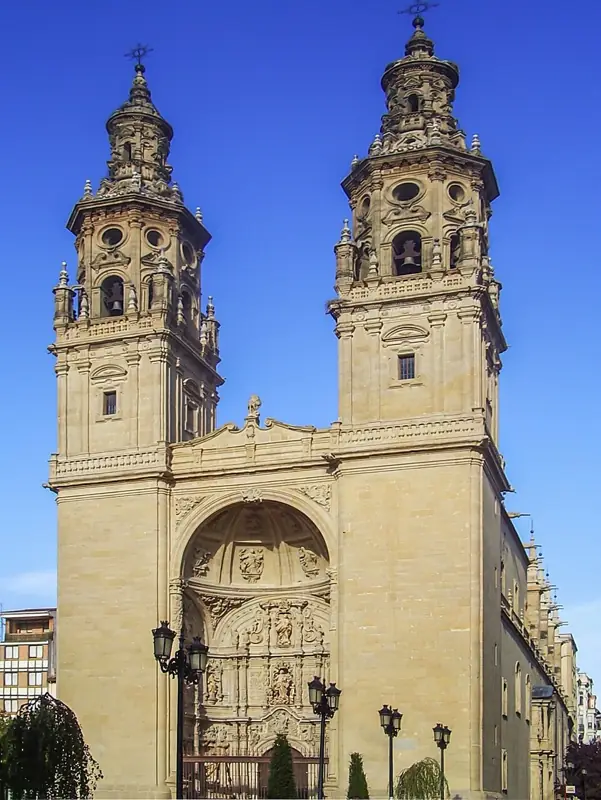
Walk Logroño between the Ebro, churches on the Camino and lively town squares. Eight stops connect the co-cathedral, Stone Bridge, Revellín walls and Museum of La Rioja, with time for lunch and a break in El Espolón.
Logroño
Choose what fits your visit
Three decisions to organise the day without turning it into a checklist of tickets. Routes and time allowances are editorial suggestions; adjust the order to your bookings and pace.
01
One doorway to study, not four to enter
With little time, San Bartolomé focuses attention on a narrative doorway, while La Redonda links square, towers and interior space. Choose between close sculpture and a broader setting. Do not make Santa María de Palacio and Santiago compulsory interiors simply because they share the walk. A thoughtful exterior comparison can explain more than entering every church briefly, while respecting worship and current visiting conditions.
The present Puente de Piedra and Cubo del Revellín belong to different moments in urban history. To explore how the town changed, compare the Ebro crossing with artillery defence rather than imagine everything shares one medieval age. Drop another church visit to study forms, plans and surroundings. Check admission to the cubo; the historical comparison can also begin from public spaces outside.
The Museum of La Rioja explores the region and a residence associated with Espartero; pinchos offer another interest and pace. If you want both, decide which receives the main time before committing to a later visit. Standing in several bars is not necessarily quicker than a meal. For rest, the Espolón can close the block without another tasting or a museum rushed for the sake of completion.
Start at the Stone Bridge, linking Santa María de Palacio, San Bartolomé and La Redonda, then Santiago el Real and Revellín. Notice how churches and gates organise the old town; treat interiors as optional extensions rather than six consecutive visits.
Begin at the Museum of La Rioja, then walk towards La Redonda and the Espolón. Have lunch in nearby pincho streets, choosing a few bars and one speciality at each. This is more relaxed than adding a winery immediately after multiple tastings.
Combine the old town with one booked winery. Decide whether you want architecture, production explanations or tasting; visits differ and are not all in the central square.
By car; plan parking and your return before setting out.
The walled town and Rioja Alavesa views make an outing without obligatory wine tasting. For an underground winery, check stairs and access before booking.
By car; plan parking and your return before setting out.
Plan bridges and squares, cathedral detail-spotting and an Espolón break. A bar crawl is not itself a children’s activity: keep stops few and include a seated meal. Check winery ages and content, as not all visits suit children.
In the rain
Focus on selected Museum of La Rioja galleries, then La Redonda if cultural access permits and lunch nearby. The Stone Bridge and Espolón are dry-weather extensions, not shelters; shorter distances make the day easier.
What to try and where to pause
On Laurel and San Juan choose two or three specialities rather than repeating orders at every bar. Check price and size, or reserve a table for a relaxed meal. Wine is optional at every stop; alcohol-free choices work just as well.
Sources for this update
Turismo de España · patrimonio de logrono
laredonda.org · patrimonio de logrono
lariojaturismo.com · patrimonio de logrono
visitalogrono.com · patrimonio de logrono
santiagoelreal.org · patrimonio de logrono
museodelarioja.es · patrimonio de logrono
lariojaturismo.com · San Millán de la Cogolla
Turismo de España · Haro
Turismo Euskadi · Laguardia
Choose your walk
Durations are indicative: queues and all indoor visits are not included.
Plan my route
Street map
OpenStreetMap loads on request. Markers are indicative, not audited entrances. Use links for street directions.
The twin towers dominate Market Square, but there is more than the façade. The usual entrance is on Portales, where street noise gives way to columns, vaults and chapels. Take your time and leave room for people coming to pray. Group visits and tower climbs have their own arrangements: check those separately before planning your visit around the church interior.
The portal turns stone into a sequence of stories. Look at the figures and gestures on the jambs before taking in the whole façade: episodes from the saint's life show how doorways also taught. The tower once formed part of the town's defences, connecting church and wall. Check interior access, and study the entrance without blocking worshippers or the street.
The spire rises above the old streets with a silhouette quite unlike La Redonda's twin towers. Follow its octagonal form upwards to the pyramidal roof before approaching the church. Inside, Arnao de Bruselas's altarpiece rewards attention when visiting arrangements allow. Compare shapes and building traditions, while respecting worship and closed rooms. The view from the street remains worthwhile even without entering.
The bridge brings river, town and Camino into one view. Although this crossing has medieval roots, today's structure opened in 1884: distinguish the continuity of the route from the age of its stones. From the pavements, study the arches and old-town skyline. If you continue down to the riverside, check path conditions and keep a safe distance from the water.
Santiago el Real places a large church among narrow streets. Study its portal, then follow the nave towards vaults and sanctuary when the interior is open. The surroundings recall pilgrims passing through Logroño, while the church remains an active parish. Ask about tower visits and stair conditions before including a climb. Allow a quiet pause rather than rushing between religious interiors.
Gate and tower show how artillery changed urban defence. The rounded tower was built after the resistance of 1521, so not every stone recalling the siege was present during it. Look for coats of arms, gun openings and wall thickness. The exterior makes a short walking stop; check opening arrangements before planning to explore the galleries inside the defensive structure.
The palace adds a domestic story to the monument walk. This Baroque house, known as the home of Espartero and Jacinta Martínez de Sicilia, now forms part of the regional museum. Compare its historic façade with the cultural collections within. Check opening and exhibitions before entering: the museum normally closes on Mondays and certain holidays, so arrange your visit accordingly.
Príncipe de Vergara Promenade, better known as El Espolón, changes the pace between old town and newer streets. Espartero's equestrian monument and the shell-shaped auditorium form a small outdoor collection. Rather than adding another hurried visit, use the gardens and benches for a break. Check the programme when events or concerts are taking place, and keep routes clear for others.
Francis Paniego's cooking beside El Espolón, in a space designed for meeting and sharing. Check seasonal dishes, allergens, opening and booking for a seated meal between visits.
A reserved sushi experience outside the compact monument circuit. Check the menu and dietary restrictions first: the venue states it has no vegetarian or coeliac-suitable menu. Plan travel and arrive punctually for your booking.
Editorial selection based on the venues’ own websites, not a personal dining review or sponsorship. Check opening, menus, allergens and prices before visiting.
Options separate from the independent walk. The free tour is tips based; check the group price for the private tour. Verified listings advertise a Spanish-speaking guide: reading this page in English or French does not change the activity language. Confirm meeting point, included admission, accessibility and conditions for your date. Affiliate links may earn us a commission if you book. Reviewed 19 October 2026.
Orient yourself towards the Espolón and old town before winery outings. The Stone Bridge is the Camino route’s narrative start, but join at your nearest stop. Arrange out-of-town tasting transport separately.