English

SALAMANCA · AYUDA TURÍSTICA

Travel guides to Salamanca

Seven guides for Salamanca: family plans, rain, visits, food, four days and nearby trips.

Plaza Mayor
muffinn · CC BY-SA 2.5

Plaza Mayor was built between 1729 and 1755 as a major public space for civic representation. Although it appears perfectly regular, its sides differ in length. Notice the medallions above the arches and the continuity of the arcades. Baroque architecture frames a setting that remains alive: a place for meeting, passing through and celebrating, rather than merely a monumental image to photograph during your visit.

Explanation source ↗

Salamanca with children

Open guide
Casa Lis
Museocasalis · CC BY-SA 4.0

Casa Lis introduces Art Nouveau and iron architecture into a city associated with monumental stone. Its difference is part of its appeal: Salamanca does not belong to just one period. Notice the role of glass, structure and decoration. The museum devoted to Art Nouveau and Art Deco extends this perspective towards objects in which art and everyday life meet in distinctive ways.

Explanation source ↗

Salamanca on a rainy day

Open guide
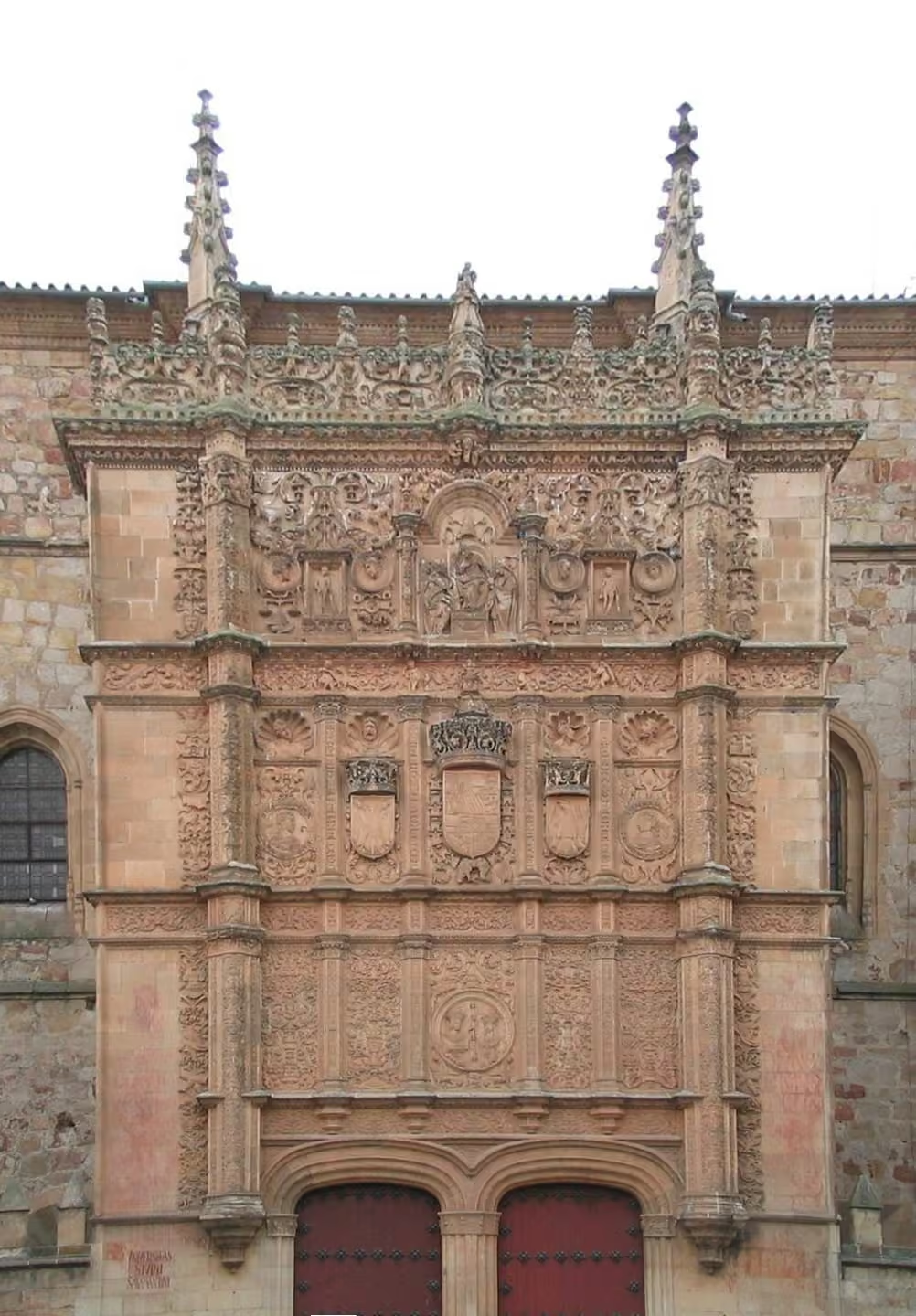
University of Salamanca
valyag; perspectiva: Ddxc · CC BY-SA 3.0

The University of Salamanca began in 1218 through the initiative of Alfonso IX of León. Its historic façade speaks of an institution that made learning part of the city's identity. Before searching for famous details, observe the whole composition from the Patio de Escuelas. Then approach the figures and coats of arms: stone also represented prestige and authority in public space.

Explanation source ↗

University of Salamanca: planning a visit

Open guide
New Cathedral
Julián Rejas De Castro · CC BY-SA 2.0

Construction of the New Cathedral began in 1513 and ended in 1733. This long process explains why one building brings together different artistic stages. First observe its volume beside the Old Cathedral, then examine the doorways. The decision to preserve the earlier church reveals a history of enlargement and coexistence, rather than complete replacement, within Salamanca's most prominent religious architectural ensemble.

Explanation source ↗

Salamanca Cathedrals: interiors and towers

Open guide