
Plaza Mayor was built between 1729 and 1755 as a major public space for civic representation. Although it appears perfectly regular, its sides differ in length. Notice the medallions above the arches and the continuity of the arcades. Baroque architecture frames a setting that remains alive: a place for meeting, passing through and celebrating, rather than merely a monumental image to photograph during your visit.

YOUR NEXT DESTINATION
Salamanca
University, cathedrals and historic towns
Salamanca
Choose what fits your visit
Three decisions to organise the day without turning it into a checklist of tickets. Routes and time allowances are editorial suggestions; adjust the order to your bookings and pace.
01
University facade and cathedrals with one chosen interior
For a first morning, choose Plaza Mayor, Casa de las Conchas and Patio de Escuelas before deciding between University and cathedral interiors. Looking for details on the university facade and exploring its visitor spaces are different activities. Choose what you want to enter and enjoy the remaining facades without rushing. This leaves time for the streets between monuments rather than reducing the entire university visit to finding the frog.
Official conditions and sources
02
Tormes or more collections: change your perspective
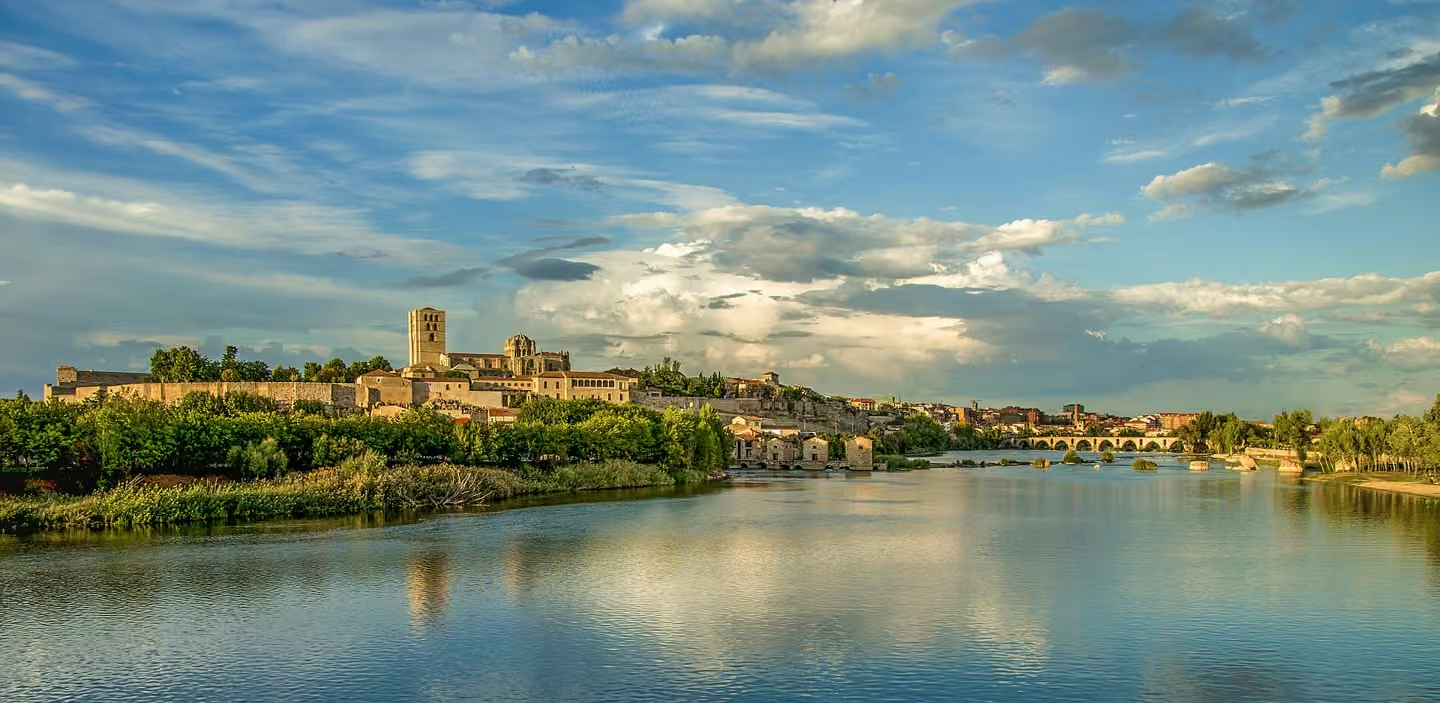
After the upper monuments, descend to the Roman Bridge to see the skyline from the Tormes. Choose that option for landscape; Casa Lis offers a different focus on decorative arts. You can combine both, but allow for the return climb and reduce other interiors. The Garden of Calixto and Melibea provides another break near the monumental area if you prefer not to extend the walk to the riverbank.
Official conditions and sources
03
Ieronimus: choose the towers, not just any ticket
For terraces and views from the cathedral towers, consult Ieronimus as a specific visit. Its entrance is at Torre Mocha in Plaza Juan XXIII, and the operator lets online buyers select an entry time. Confirm that route before arranging other admissions; visiting the naves does not establish that a climb is included. If you prefer street level, the squares and cathedral exterior retain their own interest.
Official conditions and sources
Ayuda Turística editorial suggestions. Reviewed: 26 October 2026. Consult the official sources for the conditions on your date.
Link Plaza Mayor, the University area and the Cathedrals in a walk with a few indoor visits. Save another section for the Huerto de Calixto y Melibea garden and the Tormes, allowing for the descent and return. Treat the towers as a separate activity.
MAKE THE CITY YOUR OWN
Find your side of Salamanca
MAKE THE DAY YOURS
What would you like to do in Salamanca?
Choose your time and interests. Start with a suggested guide and adapt it to your pace.
Choose your time and interests to see a plan.
Start with a free outdoor walk
Link Plaza Mayor, the University area and the Cathedrals in a walk with a few indoor visits. Save another section for the Huerto de Calixto y Melibea garden and the Tormes, allowing for the descent and return. Treat the towers as a separate activity.
Start / resume a walk
Construction of the New Cathedral began in 1513 and ended in 1733. This long process explains why one building brings together different artistic stages. First observe its volume beside the Old Cathedral, then examine the doorways. The decision to preserve the earlier church reveals a history of enlargement and coexistence, rather than complete replacement, within Salamanca's most prominent religious architectural ensemble.

San Esteban was an important Dominican centre of teaching and thought, associated with figures such as Francisco de Vitoria. Its Plateresque façade is arranged like a large stone altarpiece. Find the central scene first, then the levels surrounding it. This helps you understand the whole before examining individual figures: architecture and sculpture work together here as a shared visual narrative.

Monterrey Palace is a landmark of Plateresque architecture and the Spanish Renaissance. Its ornamental cresting and decorated chimneys show how residential architecture expressed power and lineage. Look at the upper silhouette before bringing your eyes down to the windows. Its impact does not depend only on size: carved details make the roofline a recognisable presence within the historic city around it.
Weather in Salamanca
Check the next few days and available hourly forecasts before choosing your walk.
Ranges cover the displayed hours; today includes remaining hours only. Later days may have six-hour intervals. This is a forecast, not a live observation.
Datos: MET Norway · CC BY 4.0 · AEMET
Plan your visit
Outings and practical plans
Arriving and finding your bearings
The main railway and bus stations are not in Plaza Mayor. Allow walking or city bus time before your first reservation. Distances within the monumental centre are modest; descending to the Tormes and returning adds slopes. No car is needed between university, cathedrals and squares.
Two routes to choose from
University and cathedrals
Estimated time: 4 hours with one interior
Start at Plaza Mayor, follow Rúa towards Casa de las Conchas and reach Patio de Escuelas. Study the university facade before continuing to the cathedrals. Choose one interior or tower climb; do not assume all admissions are combined. Finish at the Garden of Calixto and Melibea for a break and a different perspective.
Tormes and San Esteban
Estimated time: 3–4 hours with slopes
Descend from the cathedrals to the Roman bridge for city views from the riverbank. Return via Casa Lis towards San Esteban, allowing a break for the climb. This route reveals Salamanca’s skyline rather than only nearby facades. If entering Casa Lis, reduce other visits and adapt the sequence to its opening hours.
Nearby outings

Ciudad Rodrigo
Walls, cathedral and historic streets make a frontier-heritage outing. Explore the centre and choose a wall section; there is no need to add Portugal for a full day.
Intercity bus or car from Salamanca; check return times before extending lunch.
View on map ↗
La Alberca
Traditional architecture and the square introduce Sierra de Francia at a slow pace. Focus on the village with at most one nearby stop. Peña de Francia is a separate mountain outing.
Car to combine villages; by bus check whether same-day return permits enough visiting time.
View on map ↗
Ledesma
A Tormes-side town combining heritage and river scenery. Focus on its centre and views; adding several villages may remove the tranquillity that makes the outing worthwhile.
Car or intercity bus depending on the day; plan the return, as this is not a continuous urban service.
View on map ↗With children
Turn facades and squares into a detail hunt, limiting the day to university, cathedral exteriors and a green break. Finding the frog is a game, not the entire visit. Tower climbs involve stairs; consider age, mobility and interest before purchasing.
In the rain
Casa Lis and university or cathedral interiors allow a sheltered day with short transfers. Choose two visits that genuinely interest the group and save the riverbank for later. Plaza Mayor’s arcades offer a break, not cover for the entire walk to the monuments.
What to try and where to pause
Hornazo suits an informal meal; cured meats and provincial dishes suit a longer lunch. Check portion and filling before ordering several pieces. Van Dyck offers a different tapas atmosphere away from the monuments; allow the transfer if visiting.
Sources for this update
- Turismo de Salamanca
- La Alberca — Diputación de Salamanca
- Ciudad Rodrigo — Diputación de Salamanca
- Ledesma — Turespaña
AIRPORT ARRIVAL · CIVITATIS
From the airport to your accommodation in Salamanca
Plan the first journey of your trip. Check pickup options and book a transfer that suits your arrival.
- Airport and destination address
- Flight, passengers and luggage
Check the available airport, meeting point, luggage allowance and conditions on Civitatis before booking.
Affiliate link: we may earn a commission if you book.