
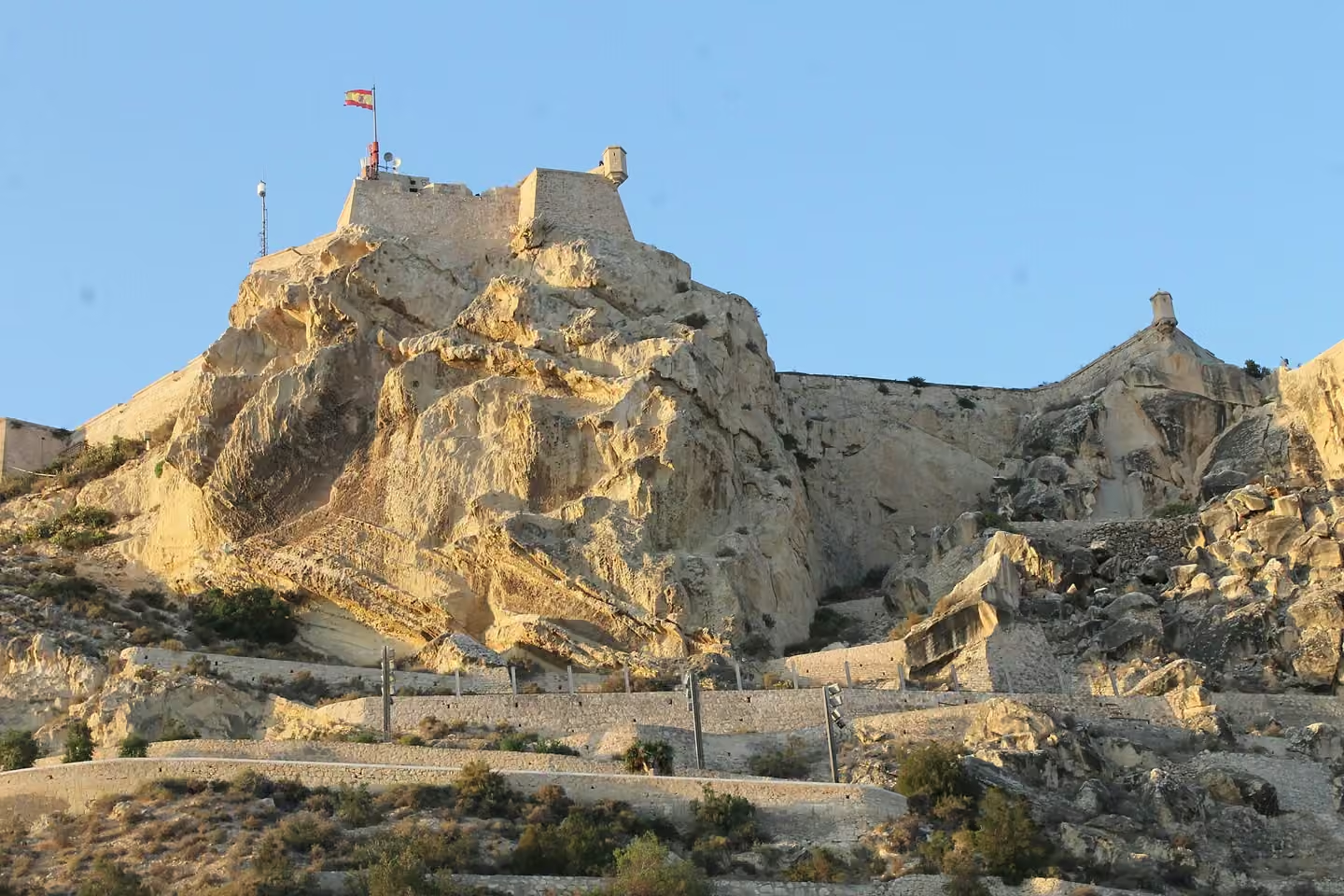
Santa Bárbara commands Alicante from Benacantil hill, and that position explains much of its history. The fortress of Muslim origin passed to Infante Alfonso of Castile on 4 December 1248, the feast day that gave the castle its name. The enclosure you see today does not belong to a single moment: successive alterations adapted its defences to different weapons and needs. Before seeking a photograph of the bay, notice how walls and platforms make use of the rock. Then identify the harbour, Postiguet beach and old town to reconstruct the relationship between defence, commerce and city. The views help organise the walk you will take below. Plan access separately: check lift operation and authorised routes, carry water and avoid a demanding climb during intense heat.
ALICANTE · AYUDA TURÍSTICA
Santa Bárbara Castle: access and visits
The lift entrance is on Avenida Juan Bautista Lafora, opposite Postiguet; the shuttle starts at Puerta del Mar. Check their arrangements and final departures separately. Do not plan your visit around parking inside the castle.
Choose how to go up and down
The lift entrance is on Avenida Juan Bautista Lafora, opposite Postiguet; the shuttle starts at Puerta del Mar. Check their arrangements and final departures separately. Do not plan your visit around parking inside the castle.
Views and history with breaks
Combine viewpoints with the MUSA galleries to explore Alicante's history. The grounds have changes in level and exposed areas: carry water, wear comfortable shoes and shorten the walk in strong heat. Check which areas are open on your visit day.
The free tour starts at the top
The Civitatis free tour meets in the castle's Patio de Armas. Allow beforehand for the ascent and possible lift queues: booking the guided walk does not reserve that transport. Review the tour conditions and budget for a guide contribution based on your experience.