
Roman amphitheatre
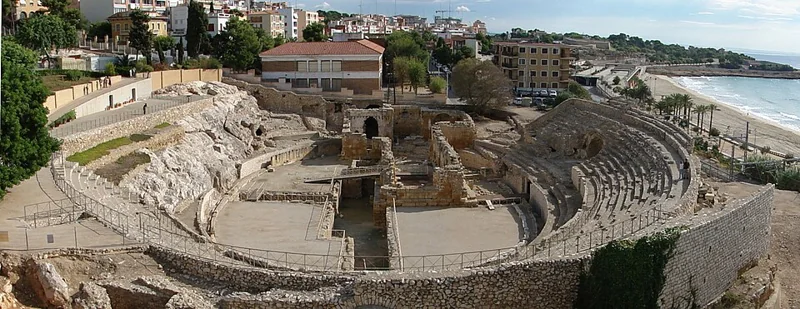
From above, let your eyes follow the oval before looking out to sea. The slope does more than frame a photograph: builders cut some northern seating into the rock, while vaulted structures supported the southern side. Dating from the early second century, the amphitheatre hosted combats and other public spectacles. Now look for a shape that interrupts the arena's geometry: the remains of a church. After Bishop Fructuosus and his deacons were martyred here in 259, the place acquired a different meaning; a Visigothic basilica and a medieval church successively occupied the enclosure. Comparing their outlines reveals a city reusing its spaces and reshaping its memory.
Explanation source ↗Sources checked on 19 October 2026. Opening and access may change. The walk does not include admission; allow extra time for interiors. Routes have not been audited for accessibility.