Lleida combines the hilltop Seu Vella and King's Castle with La Paeria, the New Cathedral and a former hospital below. Explore six central stops and plan two separate outings: Gardeny Templar Castle and La Mitjana riverside woodland.
Lleida
Choose what fits your visit
Three decisions to organise the day without turning it into a checklist of tickets. Routes and time allowances are editorial suggestions; adjust the order to your bookings and pace.
01
The city from above or art close up?
Seu Vella connects architecture with its hill; Sant Llorenç invites close attention to stone altarpieces. With little time, choose between understanding the city’s setting and studying individual works. You need not add Catedral Nova to complete an imaginary compulsory church series. For the hill, preserve effort and connections for that complex; for art, confirm interior access rather than turn the afternoon into repeated climbs.
La Suda belongs to the Seu Vella hill and evokes royal power; Gardeny occupies another hill with a Templar complex. Decide whether to explore the first setting further or reserve another outing for the second. Calling both castles does not make them equivalent or adjacent. Check each site’s visit arrangements rather than assume a cathedral-complex ticket covers every fortification appearing in the guide.
La Mitjana offers riverside woodland and observation beside the Segre; the old Hospital de Santa Maria courtyard offers a pause within civic architecture. Choose between a nature outing and continued exploration of the centre. Do not add the park merely because it follows monuments in a list: it needs its own route and return. Wildlife watching can reward attention to habitat and quiet without guaranteed species sightings.
Start at La Paeria and devote the main block to climbing to Seu Vella and La Suda. Distance alone is misleading: slopes, cloister and castle take time. Return to the shopping centre for lunch instead of adding Gardeny to the same walk.
From La Paeria follow the city axis to the New Cathedral and former Santa Maria Hospital. Finish with Sant Llorenç and choose one interior. La Mitjana and Gardeny work better as separate outings: nature and another hill, not nearby final stops.
Landscape and astronomy are separate reasons to visit. A night session needs booking and return arrangements; avoid adding it casually after a tiring hiking day.
By car; plan parking and your return before setting out.
Choose a short Seu Vella visit with cloister shape-spotting or a green morning in La Mitjana. These are separate plans with a transfer. Check hill access with pushchairs; a landmark visible across town is not necessarily reached by a flat walk.
In the rain
Choose a central museum and the former Santa Maria Hospital if access fits. The whole Seu Vella hill is not sheltered: courtyards and transfers remain outdoors. With a booking there, simplify the rest of the day instead of adding Gardeny in heavy rain.
What to try and where to pause
Eat in the lower town before or after Seu Vella rather than relying on hilltop options. If interested in snails, ask about preparation and portion size; a speciality need not become your entire meal. Allow time for a seated lunch.
Sources for this update
Turismo de España · patrimonio de lleida
patrimoni.gencat.cat · patrimonio de lleida
360.lleidaturisme.cat · patrimonio de lleida
museudelleida.cat · patrimonio de lleida
catalunya.com · patrimonio de lleida
urbanisme.paeria.cat · patrimonio de lleida
Turismo de España · Balaguer
Monasterio de Vallbona · visitas · Vallbona de les Monges
Parc Astronòmic del Montsec · Àger y el Montsec
Choose your walk
Durations are indicative: queues and all indoor visits are not included.
Plan my route
Street map
OpenStreetMap loads on request. Markers are indicative, not audited entrances. Use links for street directions.
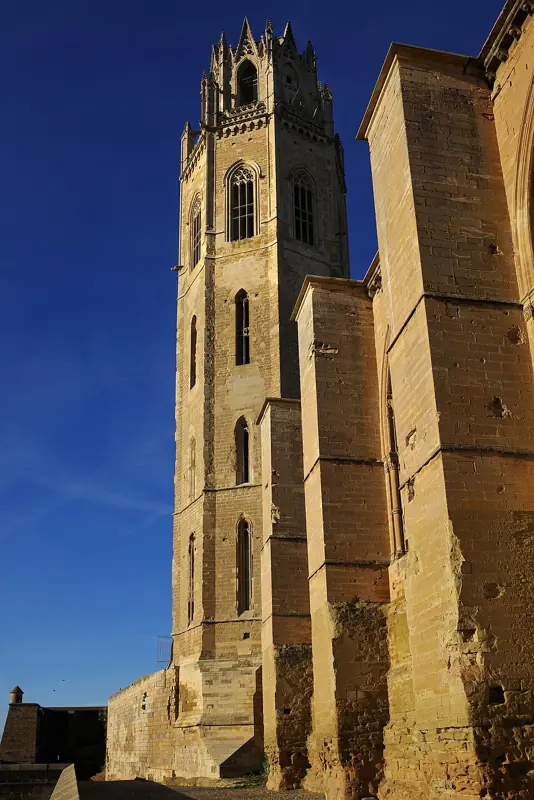
The old cathedral occupies the hill that helps explain Lleida. Its portals and cloister reveal the craftsmanship of the School of Lleida, between Romanesque and Gothic forms. Look towards the city from the galleries before continuing to the castle. Church, cloister and bell tower require different levels of effort: check your admission and the conditions for climbing before choosing your route.
Higher on the same hill, La Suda introduces political power into the story. The castle retains part of the former palace associated with the rulers of the Crown of Aragon. Study its walls and position before imagining the missing buildings. It complements the Seu Vella, but do not assume identical opening arrangements: confirm the available rooms and route for your visit.
Compare the town hall's two faces: its medieval front towards the square and its transformed riverside façade. Together they suggest an old building still serving a living city. Study the windows and proportions without interrupting municipal business. The courtyard and underground remains add further layers when accessible. Check which rooms and archaeological areas are actually open rather than assuming unrestricted access.
The New Cathedral exchanges hilltop scenery for a shopping street and square. Its eighteenth-century architecture lets you compare the former episcopal seat with the church that later assumed that role. Study the façade's scale and, when admission allows, the rhythm of the nave. This remains a place of worship: check opening and services before planning an interior cultural visit here.
Opposite the cathedral, the former hospital introduces care and civic architecture into your walk. Its courtyard and staircase focus attention on stone, proportions and movement. Today it houses the Institut d'Estudis Ilerdencs, connecting the old building with contemporary cultural life. Check exhibitions and open rooms before entering; access to the courtyard does not necessarily include every gallery or institutional space inside.
Sant Llorenç offers another approach to medieval art. Later rebuilding brought different architectural periods together, while its interior preserves stone altarpieces associated with the School of Lleida. Choose one group and follow its figures and relief rather than trying to read every scene. Parish and museum collaborate on visits: check the current options, allow time to look and respect the church's religious use.
Gardeny occupies another hill and deserves its own outing rather than a rushed addition after the Seu Vella. The Templar complex preserves defensive spaces and the Romanesque church of Santa Maria. Consider how residence, worship and protection worked together here. Arrange travel and return, and check opening or booking requirements. Distinguish the documented history of the order from the legends surrounding it.
La Mitjana replaces façades with riverside woodland around the Segre. Plan it as a nature outing separate from the monument circuit, with time to walk slowly and listen before looking for birds. Keep to marked routes and avoid disturbing wildlife. Check municipal access notices, particularly after rain or during risk alerts; surfaces and conditions vary between paths, so choose your route accordingly.
An option outside the compact historic-centre circuit for a planned meal in the northern area. Confirm opening, menus, allergens and booking before travelling.
Editorial selection based on the venues’ own websites, not a personal dining review or sponsorship. Check opening, menus, allergens and prices before visiting.
Optional paid activities. Affiliate links may earn us a commission. The city walk checked visits exteriors and does not include monument admission. The Gardeny visit checked includes castle admission. Listings advertise a Spanish-speaking guide; Gardeny may be bilingual. Reading this guide in English does not change the service language. Check final prices, availability, accessibility and conditions before booking. Reviewed 18 October 2026.
Drop luggage and choose hill access before Seu Vella; it is not a flat transfer. Gardeny and La Mitjana are outside the compact Paeria–New Cathedral axis, requiring another block and transfer.