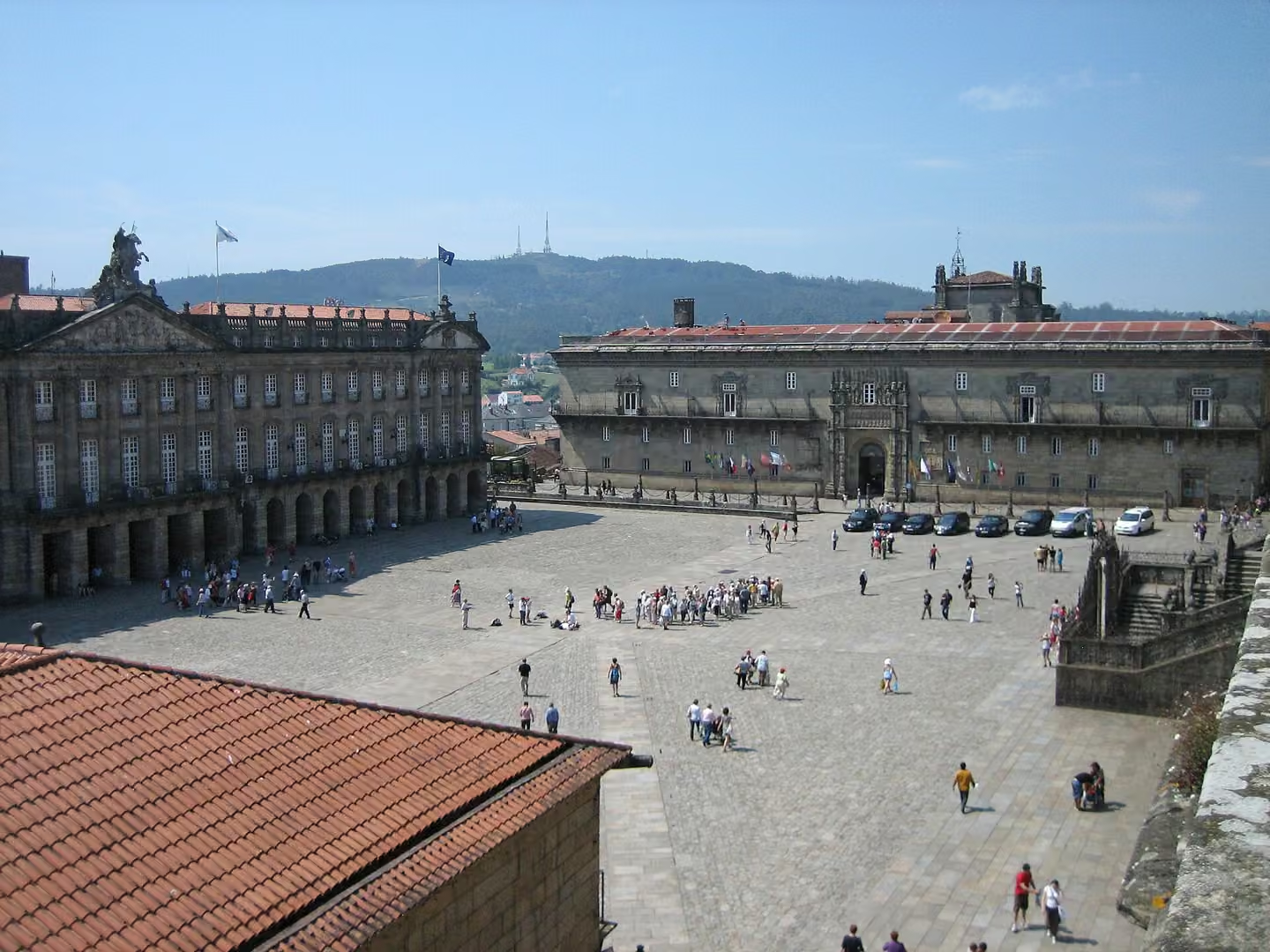
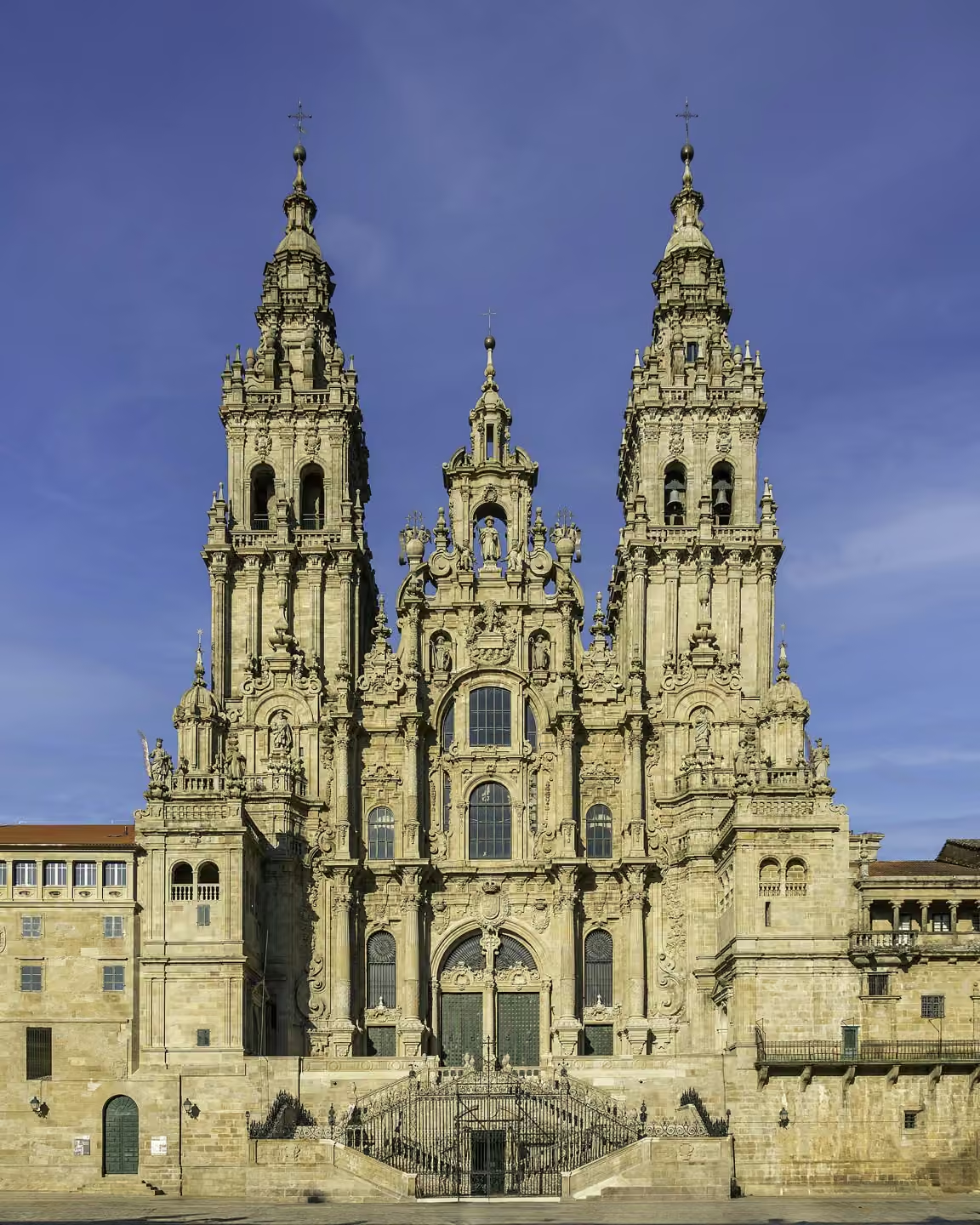
Obradoiro brings together different sides of Compostela: the cathedral, municipal authority at Raxoi Palace and the experience of people arriving from the Camino. Before taking photographs, turn slowly and compare the façades. The square acts as an urban stage where architectural styles, institutions and travellers coexist, each contributing a different story to this place of arrival.
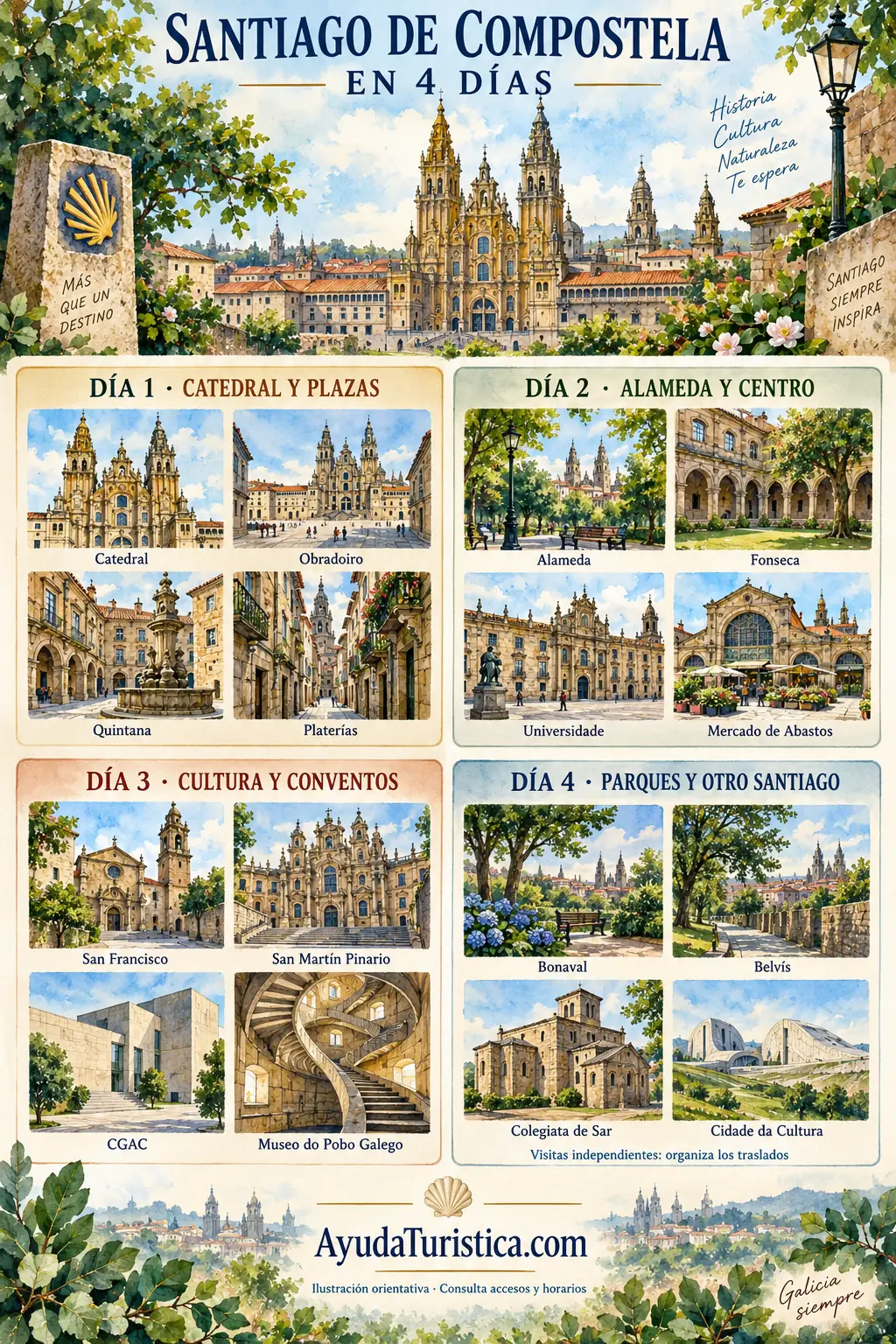
Construction of the great Romanesque cathedral began around 1075, when pilgrimage had become enormously important. The building you see brings together later transformations around that medieval core. Do not reduce it to a single period: compare façades, volumes and routes. Its history is a continuity of worship, arriving travellers and architectural adaptation around Saint James's tomb, shaping both the monument and the city.
Quintana recalls uses that may be difficult to imagine today: market activity, municipal life and a cemetery. Its two levels preserve the names Quintana de Vivos and Quintana de Mortos. Look at the steps linking them and the broad stone surfaces. The square shows how an everyday and funerary space became one of Compostela's major monumental settings.
Praterías takes its name from silversmiths established beside the cathedral since the Middle Ages. The Romanesque façade brings together sculptures that did not all originate in the same position. Look at the figures as parts of a stone narrative and compare their sizes. The square connects craft, pilgrimage and religious imagery within a particularly rewarding place to pause.
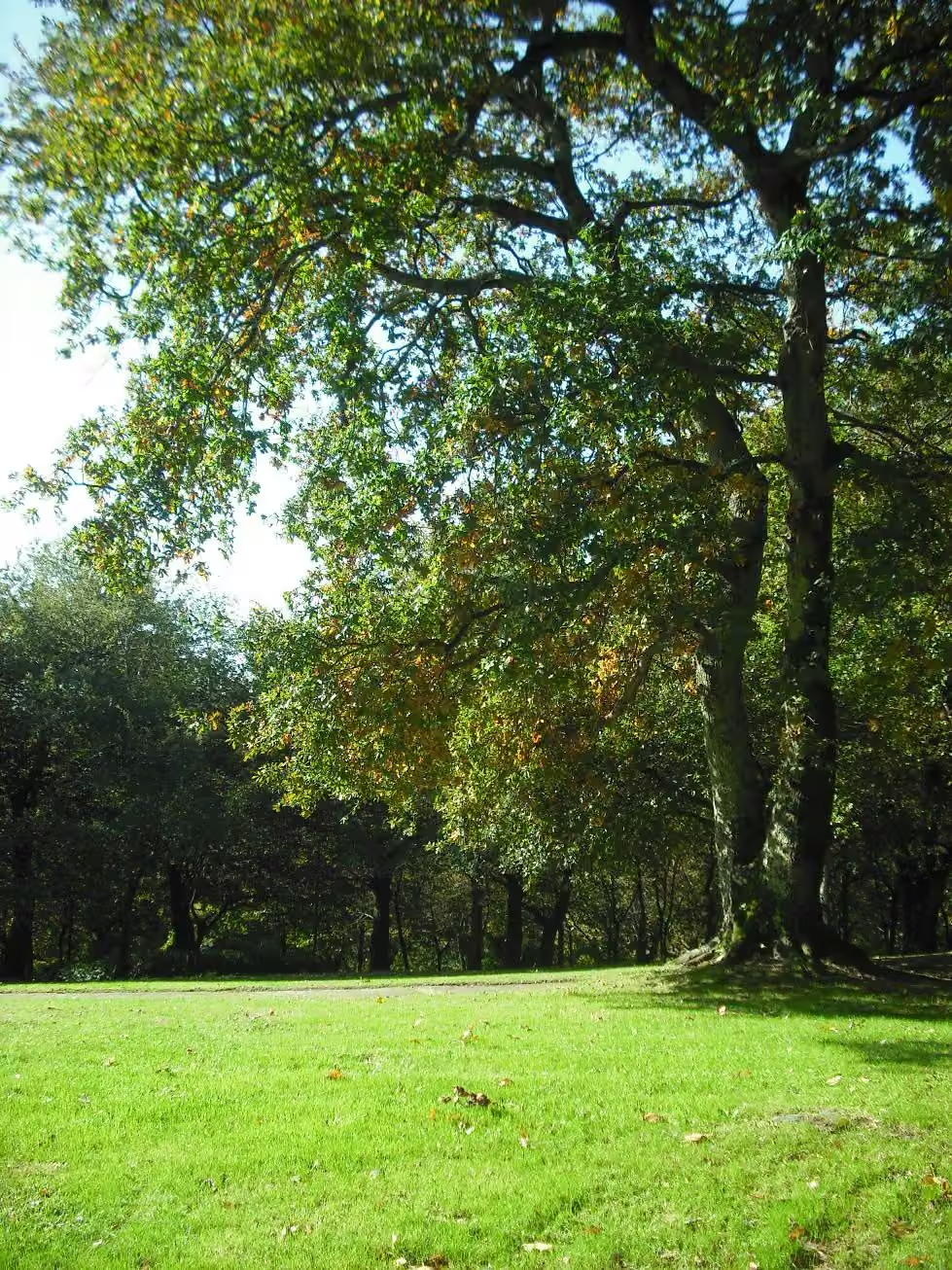
The Alameda developed beside the western edge of the historic city. The horseshoe-shaped walk around Santa Susana's oak grove took shape during the nineteenth century. Walking here combines shade, views and urban memory. Find a perspective over the rooftops and cathedral: the city becomes easier to understand when you step away from its individual streets and monuments.
Fonseca College is connected with the early history of the University of Santiago. Alongside its academic role, it housed the first Galician Parliament in 1982. These overlapping functions invite you to see the building as a place of knowledge and representation. Observe the façade and, when access permits, the transition from the street into its interior spaces.
Compostela is also a university city, with an academic history extending over five centuries. This square introduces the everyday Santiago that exists alongside pilgrimage. Many residents identify the Geography and History building simply as the University. Notice how it addresses the square and watch students moving through historic streets that remain part of a living academic community.
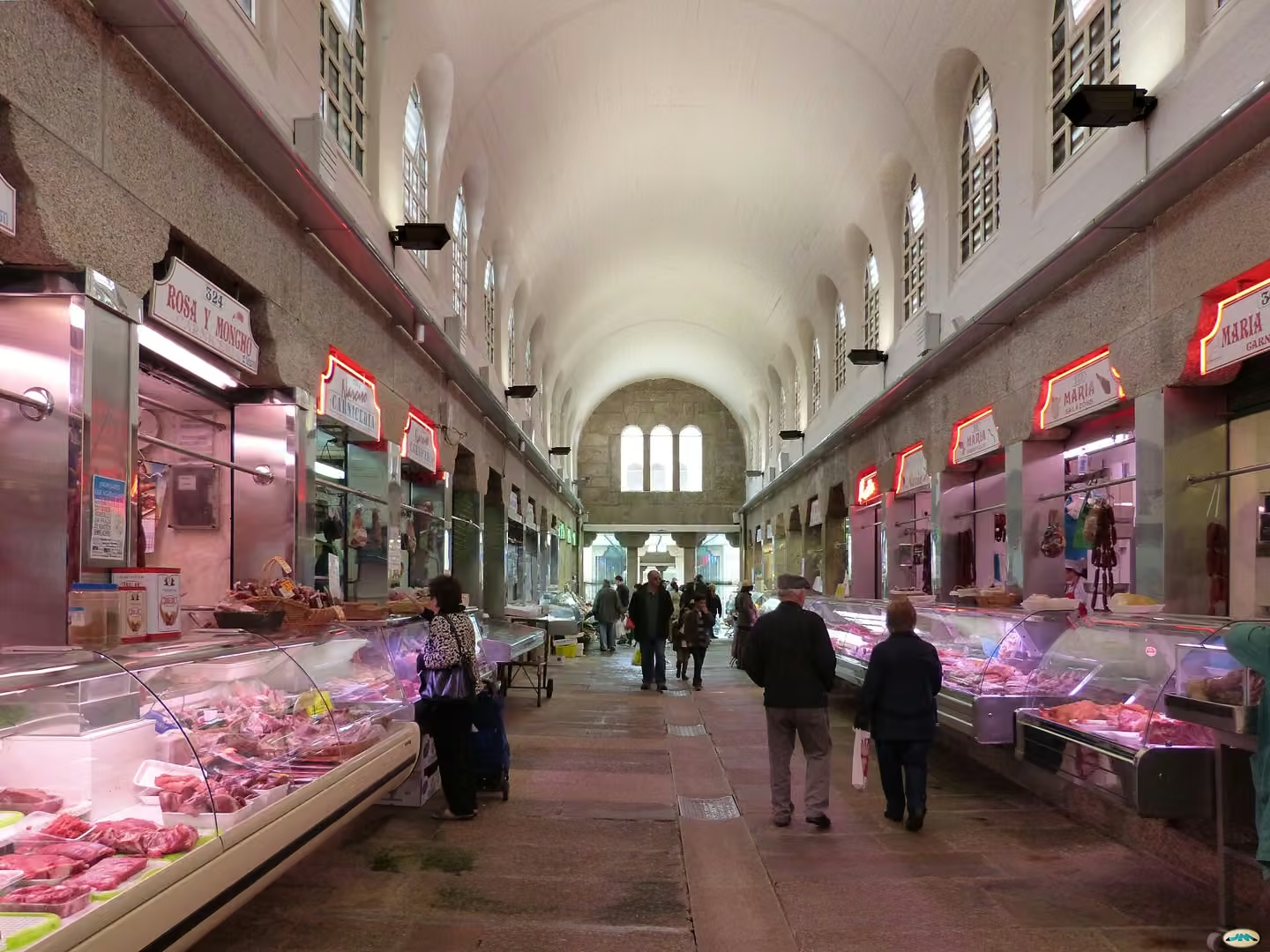
The present market was built in 1941 by Joaquín Vaquero Palacios. Its architecture frames everyday activity connecting Santiago with Galician produce and producers. Look at the repeated market halls before entering. Among the stalls, remember that the visit works best when it respects daily shopping: this is a place of work as well as somewhere for visitors to explore.
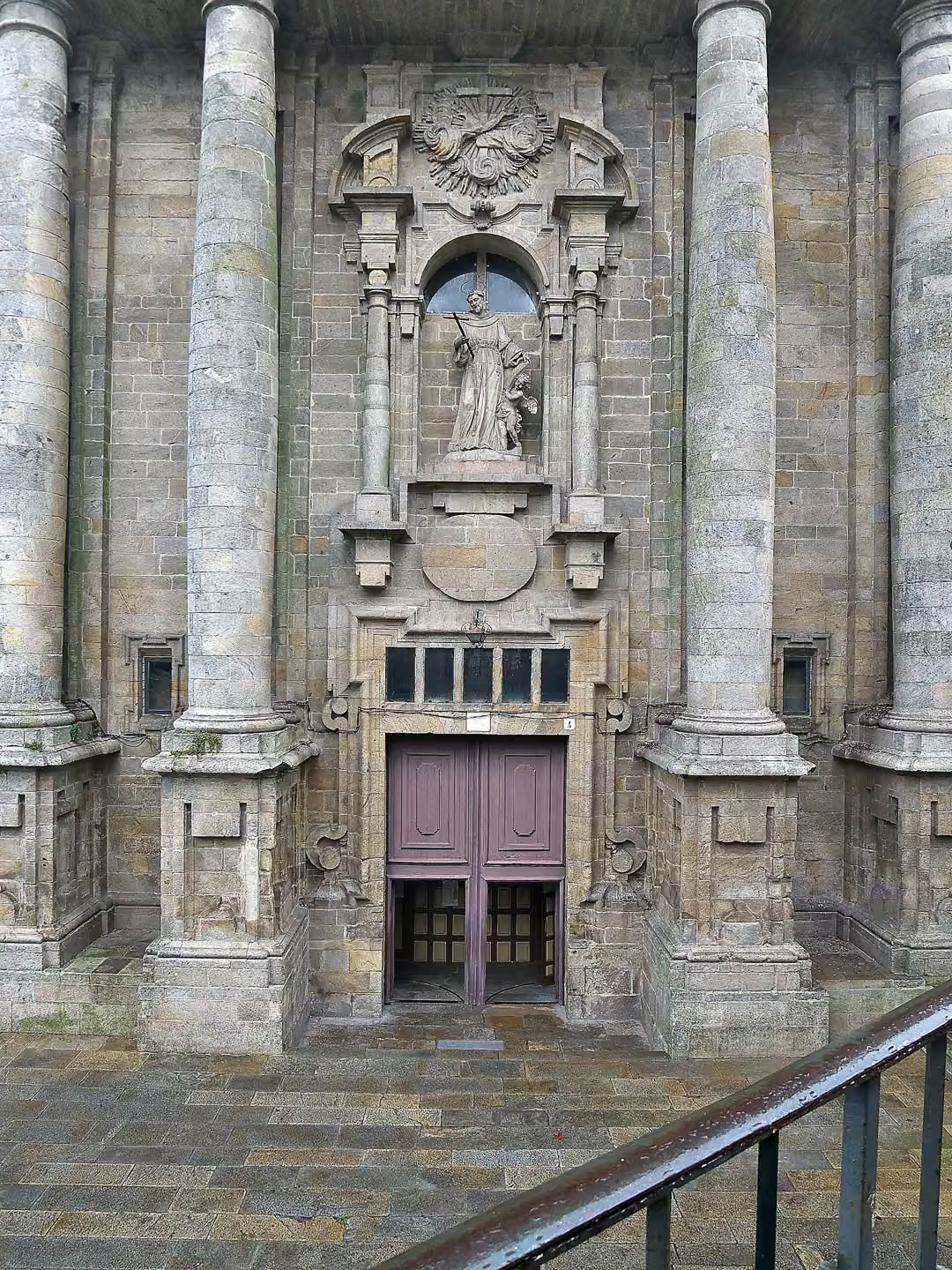
Tradition connects the foundation of San Francisco with the saint's visit in 1214. The present church was built in the eighteenth century, followed by Neoclassical changes to its façade. Distinguish the documented building history from stories surrounding its origins. Notice the calm composition and the monument in the forecourt before continuing into the nearby streets of Compostela.
San Martiño Pinario traces its origins to monks who settled near Saint James's tomb in the ninth century. The complex grew into a major presence within the religious city. Notice the scale of its walls and compare it with surrounding streets. The history of monastic life becomes tangible here even before you step inside the building.
Álvaro Siza designed the Galician Centre of Contemporary Art in dialogue with the neighbouring convent. Its volumes and routes reveal another way of building within a city renowned for heritage. Look at the meeting of planes, light and changes of scale. This stop invites you to compare contemporary and historic architecture without treating them as separate worlds.
The Museo do Pobo Galego occupies the former Bonaval convent and explores Galician culture and everyday life. This change of use connects architectural heritage with the memory of people. Think about the occupations, ways of living and traditions that shape a region. The building itself is also part of what you are discovering, rather than merely a container.
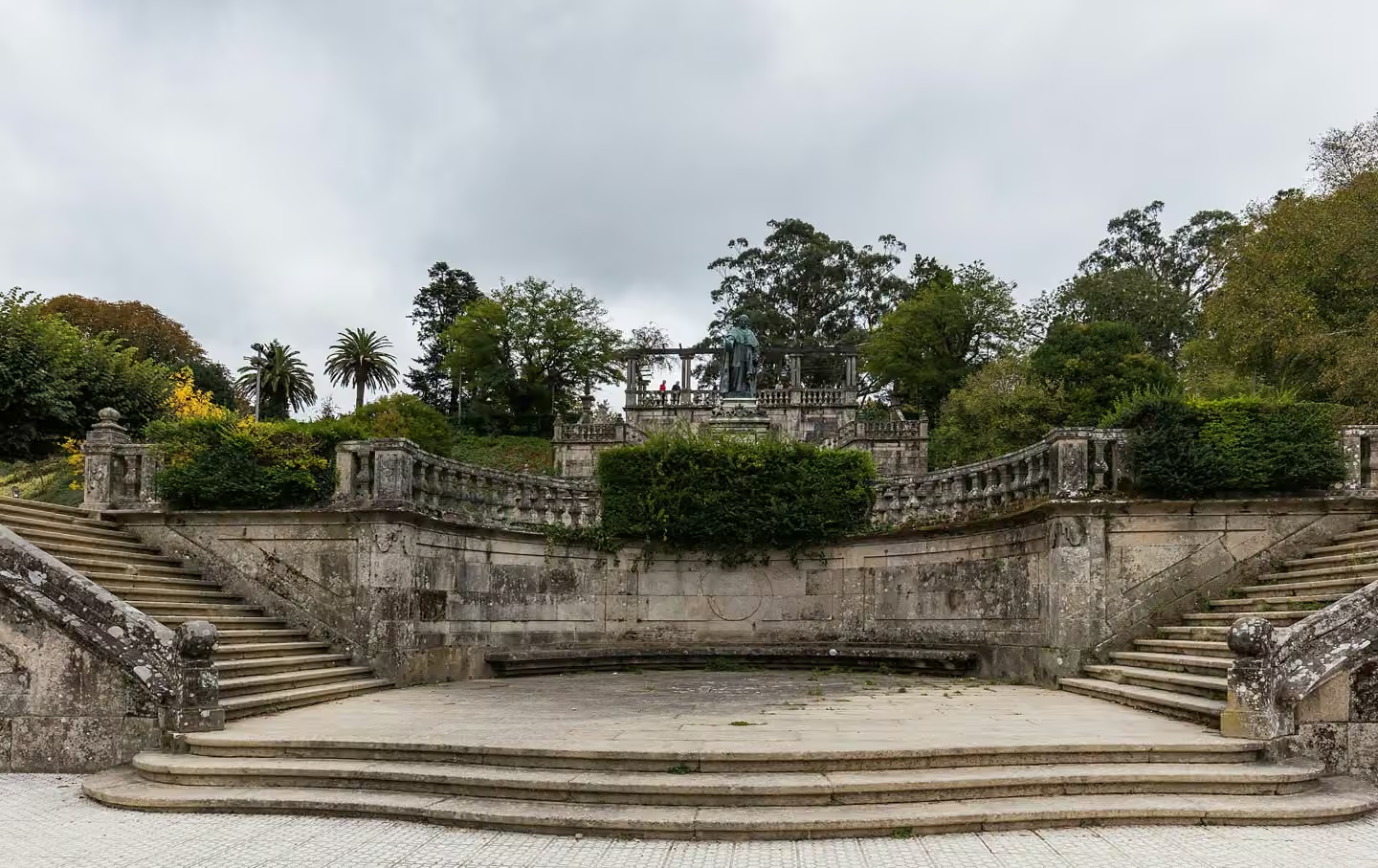
Bonaval Park occupies grounds and a former cemetery belonging to the Dominican convent. Its rehabilitation turned these historic layers into an urban landscape for walking. Notice the terraces, traces of walls and views across the rooftops. This is not a garden that conceals the past: the memory of the place shapes the way you move through it.
Belvís preserves walls, terraces and historic paths within a green space that separates and connects the old city and large religious buildings. Its design respected the memory of the terrain rather than removing it. Follow the changes of level and stone lines with your eyes. The park reveals how topography shaped Compostela beyond its most monumental streets.
The Collegiate Church of Sar introduces a different scale of Compostela's religious heritage, away from the cathedral's grand setting. Its Romanesque architecture invites close attention to proportions, arches and supports. Notice how the church relates to the ground and its surroundings. This stop extends Santiago's story beyond the monumental core where most pilgrims and visitors tend to gather.
The Cidade da Cultura presents Peter Eisenman's architecture as an experience of routes and large forms. Compared with Santiago's compact streets, the scale and relationship with the landscape change here. Notice how roofs and passages between buildings create different perspectives. The visit reveals a Compostela that also develops its identity through contemporary architecture and cultural activity beyond its historic centre.