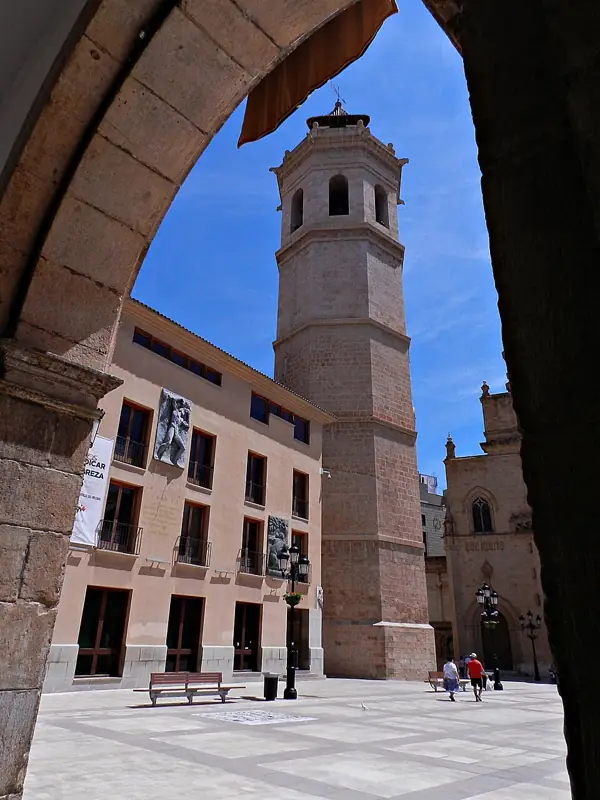
El Fadrí watches over the square without leaning against the church. That separation explains its Valencian name, meaning bachelor. The octagonal tower rises 58 metres, and building work begun in the fifteenth century reached completion in 1604. Inside, it brings together functions we now tend to imagine separately: a public clock, an ecclesiastical prison, the bell ringer’s home and the bell chamber. From ground level, notice how the cornices organise the masonry and how the silhouette changes as you walk around it. Bells once communicated events to people unable to read a written notice. MUCC publishes visiting information and describes roughly two hundred spiral steps: check availability before climbing. This outdoor explanation also makes sense without undertaking the ascent.
Sources checked on 17 October 2026. Opening and access may change. The walk does not include admission; allow extra time for interiors. Routes have not been audited for accessibility.
Plan this visit
Choose the climb or a reading from the square
The MUCC explicitly states that there is no lift and that interior access uses a spiral staircase. Consider that effort before deciding and check official arrangements. Understanding the separation between bell tower and church does not require climbing: compare their volumes and the surrounding space from the square.
Give the visit a thread
If you enter, we suggest following the rooms’ functions —keeping time, living and communicating through bells— rather than focusing only on the final view. The MUCC provides panels and audio-guide resources. Check the available format and distinguish an individual visit from an arranged group visit.