Mudéjar towers, squares and a love story central to local identity. Many sights cluster in the old town, but slopes and interiors deserve time. Dinópolis and Albarracín are separate plans requiring their own transport arrangements.
Teruel
Choose what fits your visit
Three decisions to organise the day without turning it into a checklist of tickets. Routes and time allowances are editorial suggestions; adjust the order to your bookings and pace.
01
Mudéjar: painted roof or brick tower
For a brief visit, choose which aspect of Mudéjar interests you: the cathedral roof’s structure and images, or El Salvador’s brick and ceramics. These are not interchangeable decorations. Choose one main visit and view the other from public space, checking what each option allows. This leaves time to recognise materials and figures instead of accumulating climbs and admissions without distinguishing what each building teaches.
San Pedro offers architecture, the Lovers’ tradition and Juan de Ávalos’s funerary sculpture. Before choosing admission, identify the experience you want and check the spaces included. If Mudéjar is your priority, the famous story need not replace that decision. Enjoy the love story as a tradition without treating every episode as proven documentation, or assuming that visiting the mausoleum means you have also explored the church.
The Escalinata links station and old town through a modern work using historic references; Los Arcos tells the story of water supply. To move beyond towers and churches, choose by that distinction rather than treat both as incidental monuments. With a train approaching, keep a clear station connection and save the aqueduct. Historic-looking architecture is not necessarily medieval, and a photograph does not resolve your transfer.
Enter from the staircase via El Salvador and Torico Square, then continue to San Pedro, the cathedral and San Martín. Choose a tower climb or the Lovers complex as your longer visit; squeezing every interior between trains leaves little time for the streets.
Start with Teruel Museum and the cathedral surroundings, then walk to Los Arcos to understand the aqueduct’s urban water-supply role. Return to Torico Square for a break. This manageable second route avoids repeating the first route’s tower climbs.
Allow a day for the old town and views. The high walls are a demanding extension, not compulsory access to the village; allow for slopes and wear suitable shoes.
By car; plan parking and your return before setting out.
The castle and former collegiate church surroundings make a half-day. Check castle access before leaving and spend the remaining time exploring streets.
By car; plan parking and your return before setting out.
Start by finding the small bull on Torico Square, then patterns on the towers. Choose just one climb. Dinópolis needs its own ticket, transfer and generous block rather than being squeezed between every monument.
In the rain
Start indoors at Teruel Museum, then choose another interior. The Lovers complex tells a different story from the towers and deserves a full visit. Save Los Arcos and staircase panoramas for a dry interval; they are not covered alternatives.
What to try and where to pause
Try Teruel ham for a short break or choose a local meal without chaining tastings. Suspiros de Amante make a sweet souvenir. Regional specialities such as truffle are seasonal and not automatically available year-round.
Sources for this update
Turismo de España · Albarracín, Mora de Rubielos
patrimonioculturaldearagon.es · patrimonio de teruel
turismo.teruel.es · patrimonio de teruel
amantesdeteruel.es · patrimonio de teruel
Turismo de España · patrimonio de teruel
Turismo de Aragón · Rubielos de Mora
Choose your walk
Durations are indicative: queues and all indoor visits are not included.
Plan my route
Street map
OpenStreetMap loads on request. Markers are indicative, not audited entrances. Use links for street directions.
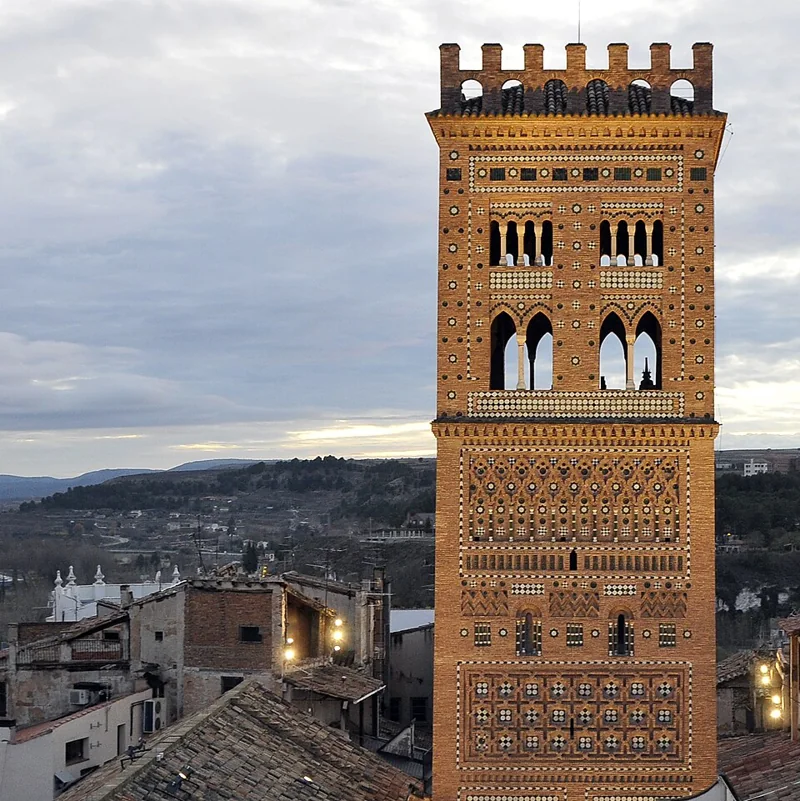
El Salvador reveals Mudéjar as a way of building as well as decorating. The vaulted passage at its base incorporates the tower into the street, while brick and ceramic ornament organise its exterior surfaces. Before entering, choose one ornamental band and follow its pattern until you understand the repetition; then move farther away and notice when individual details become a texture. An interior visit helps connect these motifs with the space supporting them. The ascent uses stairs, so judge it against your mobility and leave energy for the remainder of the walk. Afterwards, compare the tower with San Martín. Their resemblance does not remove their differences: finding a variation in the rhythm of windows or decorative bands is more rewarding than collecting near-identical photographs of each.
The little bull above the column catches the eye, but this square also tells the story of Teruel’s transformation in the early twentieth century. Merchants commissioned Modernist buildings for businesses and homes; Pablo Monguió contributed examples including El Torico and La Madrileña. First consider the contrast between the tiny animal and the space the square gives it. Then follow the arcaded edge, looking above shopfronts: curves, plant motifs and ironwork reveal another city alongside the medieval towers. You need not identify every house to enjoy the composition. Choose two façades and compare their balconies and rooflines. The square remains a place for meeting and commerce, so a pause also reveals heritage within everyday life before you continue towards the cathedral or San Pedro.
The cathedral holds a key to understanding Teruel: its painted roof from the late thirteenth century combines timber construction, geometric ornament and figures from medieval society. It is more than a covering overhead, inviting you to recognise people and activities within a composition extending above the nave. Begin with its overall form and the rhythm of its beams, then seek one particular scene. Moving between these scales prevents rich decoration from becoming an indistinct patch in the distance. Outside, examine the tower too and compare its materials with the other towers on your route. Plan the interior as a separate visit, checking which spaces your chosen admission includes. Appreciating the roof requires time and a comfortable viewpoint; it is not a detail to hurry past on the way elsewhere.
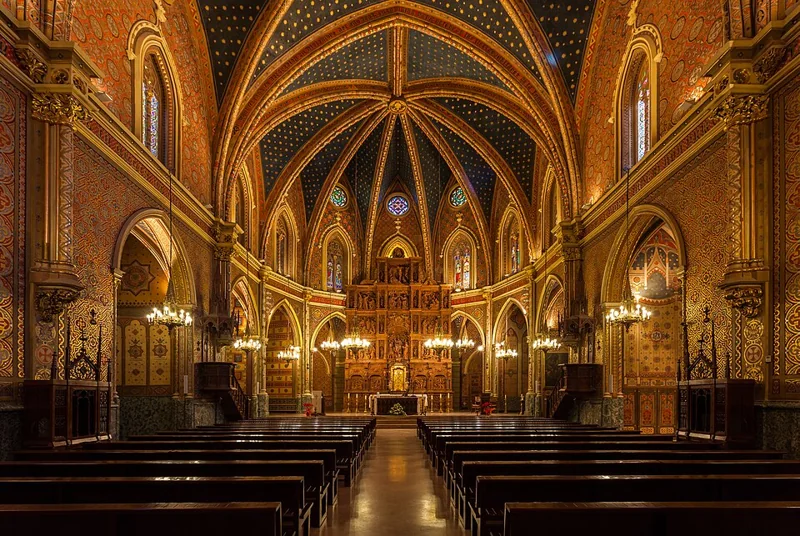
At San Pedro, distinguish three experiences: the church’s architecture, the traditional Lovers’ story and Juan de Ávalos’s funerary sculptures. Isabel and Diego’s tale belongs to Teruel’s identity, but its legendary transmission does not establish every episode as historical fact. In front of the reclining figures, notice the hands approaching without touching: this gesture gives visual form to the separation at the heart of the narrative. Then turn your attention to the building and compare its decoration with the towers you have already seen. The visit becomes more than simply learning the ending of a story. Check the complex’s admission options to establish whether church, cloister or other spaces are included, and allow an unhurried slot. Sculpture, tradition and architecture become richer when you recognise what each contributes.
San Martín was built in 1315–1316 and has two concentric towers, with circulation between them. Its decoration combines brick with green-and-white glazed ceramics, including distinctive eight-pointed stars. First examine the complete silhouette from the square, then approach to follow one star until you locate its repetition. The effect changes with distance: what appears to be a continuous band is assembled from small pieces and projecting details. If you have seen El Salvador, try to identify a difference without needing the technical name of every pattern. Comparison makes the walk more attentive and brings the craft into focus. Treat this as an exterior stop, checking any potential admission or climb separately. Before continuing towards the cathedral, notice how the street passes beneath the tower.
The Escalinata seems to converse with medieval Teruel, although it opened in 1921. José Torán designed this link between the railway station and old town, combining Mudéjar references with Modernist ironwork. Aniceto Marinas’s relief of the Lovers adds another expression of local identity. Begin by reading it as infrastructure: the arrangement transforms a change in level into a monumental entrance to the city. Then pause on a landing and compare railings, brickwork and the lines of the stairs. Looking back from above explains the relationship between the elevated town and the station. You do not have to descend the entire staircase to appreciate its composition. With luggage or a pushchair, check alternatives and their operation first, ensuring that the return does not become an unexpected climb at the end of your walk.
Teruel Museum expands the city of towers into a study of its inhabitants and surrounding territory. It occupies the Casa de la Comunidad, a Renaissance palace, and brings archaeology together with evidence of traditional rural society. Medieval and later ceramics from Teruel’s pottery workshops provide a useful thread connecting everyday objects with materials encountered in the streets. Before entering, spend a few minutes studying the façade, remembering that the building is also part of the visit. Inside, choose one room or group of objects and ask what they were for, how they were made and what they reveal about their users. Following questions prevents a hurried circuit of every display case. Check the current calendar and exhibitions: the museum is an alternative in rain, but deserves its own visiting time rather than serving simply as shelter.
Los Arcos reveals an aspect of urban history sometimes overshadowed by churches and palaces: getting water into the city. Work on the supply began in 1537, drawing water from Peña del Macho; Pierres Vedel designed this classically inspired structure to cross the northeastern ravine. Its two levels combine six upper arches and two lower ones, bringing together aqueduct and viaduct functions. From a safe pedestrian area, follow the upper line with your eyes and imagine its continuation beyond the visible section. Then compare the two storeys: the change in scale helps explain how the engineering responds to the ground. Relate the visit to the central cisterns without confusing their functions. A long hike is unnecessary to understand the structure; plan the return and take photographs from the pavement.
An option for a booked meal in the old town. Confirm menus, availability and allergens directly; booking office hours are not necessarily service hours.
Editorial selection based on the venues’ own websites, not a personal dining review or sponsorship. Check opening, menus, allergens and prices before visiting.
Options separate from the independent walk. Check dates, meeting point, included tickets and conditions before booking. Verified listings advertise Spanish-speaking guides: reading this guide in English or French does not change the activity language. Free tours are tips based. A general tour does not automatically include every interior on this route. Affiliate links may earn us a commission. Reviewed 19 October 2026. The guided Teruel visit covers exteriors and does not enter monuments.
The staircase links the station area and centre but adds climbing. With luggage or stair difficulties arrange your accommodation transfer first. Dinópolis and provincial outings are outside the Torico walking circuit.