Soria combines Romanesque portals, civic squares and literary scenery beside the Duero. Separate the centre walk from the river outing: San Juan de Duero and San Saturio need their own time and return plan. In cold or wet weather, a confirmed interior and relaxed meal beat rushing every stop.
Soria
Choose what fits your visit
Three decisions to organise the day without turning it into a checklist of tickets. Routes and time allowances are editorial suggestions; adjust the order to your bookings and pace.
01
Portals and squares for a focused first visit
With limited time, choose Santo Domingo and San Juan de Rabanera for two views of medieval sculpture, connected through central streets and Plaza Mayor. Gómara Palace adds a Renaissance contrast from outside: its judicial use does not provide an ordinary tourist interior. This choice avoids making the morning depend on several openings and saves the Duero for an outing you can enjoy without rushing.
San Juan de Duero and San Saturio: choose your riverside outing
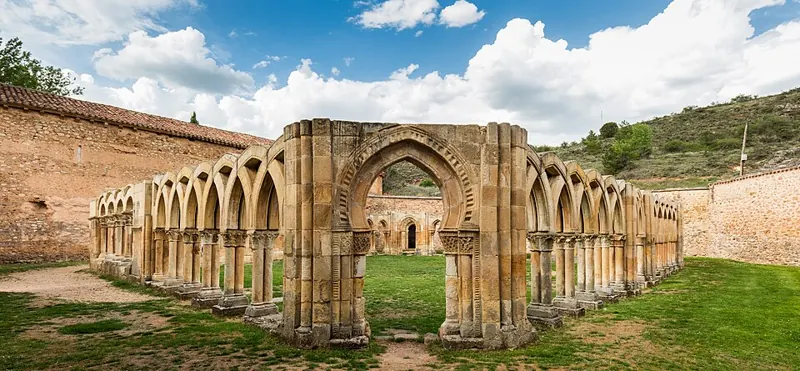
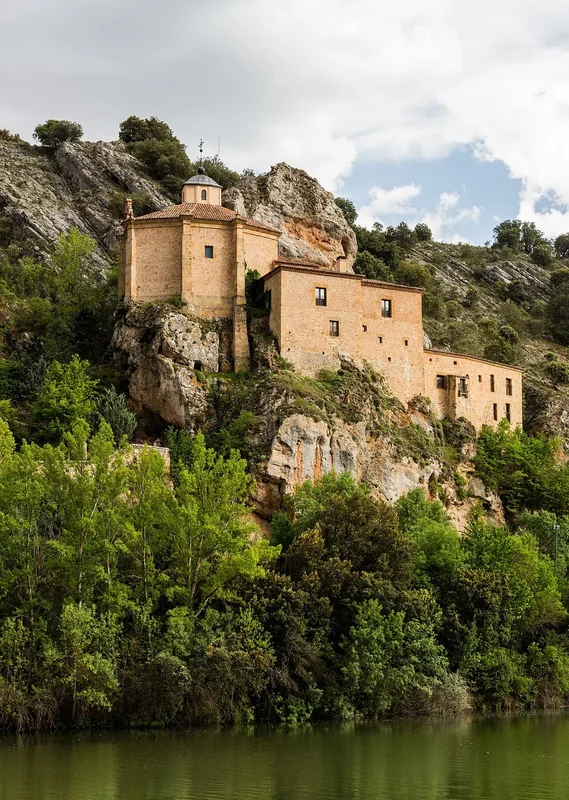
San Juan de Duero cloister and San Saturio hermitage belong to the riverside landscape, but are not consecutive entrances in the city centre. Choose the cloister for its arches, or San Saturio for the relationship between building, rock and river. To combine them, make the riverside walk your main activity and plan the return uphill, rather than adding it after a full monumental morning.
San Pedro or Alameda: a break need not mean the river
After exploring the centre, choose between continuing your Romanesque interests at San Pedro or resting in Alameda de Cervantes. The co-cathedral and cloister justify checking a specific visit; the park answers a different need, a pause. Do not choose San Pedro merely because it lies towards the Duero: if you want its cloister, confirm admission and give it attention in its own right.
Start at Santo Domingo and descend to Gómara and Plaza Mayor. Compare the palace façade with church doorways, then continue to San Juan de Rabanera and finish in the Alameda. This compact circuit leaves lunch time without adding the longer riverside extension.
Set aside a separate block for San Pedro, San Juan de Duero and the walk towards San Saturio. Cloister and hermitage have independent access arrangements. San Saturio lies away from the centre: include the return distance and shorten the walk with a pushchair.
Traditional village architecture paired with pine-country scenery. Laguna Negra needs separate access and weather planning; it is not an adjoining walking stop.
By car; plan parking and your return before setting out.
Split the visit between spotting carvings at Santo Domingo and resting in the Alameda. Give the Duero another morning with a chosen section. San Saturio is not a square-length stroll; consider distance and access before bringing a pushchair.
In the rain
Choose the Numantine Museum for regional context, then one central interior. This gives the day a theme instead of hopping between churches for shelter. San Juan de Duero includes open areas and San Saturio requires travel, so neither is an automatic rainy-day substitute.
What to try and where to pause
Choose a short central snack or longer meal before descending to the Duero. Ask about Soriano cooking and seasonal produce. Do not assume the required food service exists beside San Saturio; organise lunch and water before the riverside section.
Sources for this update
Turismo de España · Vinuesa
turismosoria.es · patrimonio de soria
Turismo de España · Numancia, Garray
Turismo de España · El Burgo de Osma
Choose your walk
Durations are indicative: queues and all indoor visits are not included.
Plan my route
Street map
OpenStreetMap loads on request. Markers are indicative, not audited entrances. Use links for street directions.
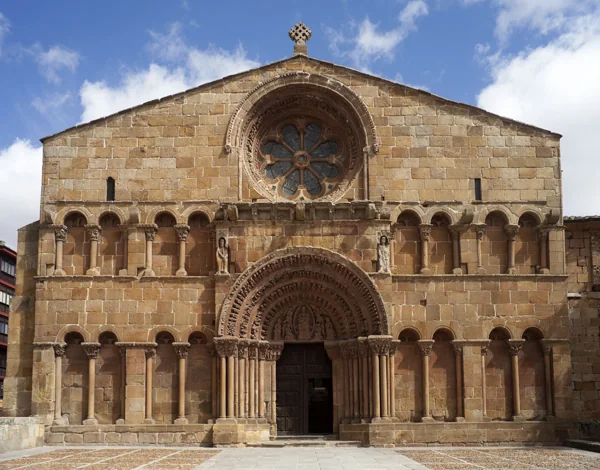
First take in the whole façade, then approach the portal figures. Romanesque sculpture forms a visual narrative here: compare gestures and scenes instead of taking a rushed photo. The interior remains a religious space. During services or closure, examining the exterior is still a worthwhile visit in its own right.
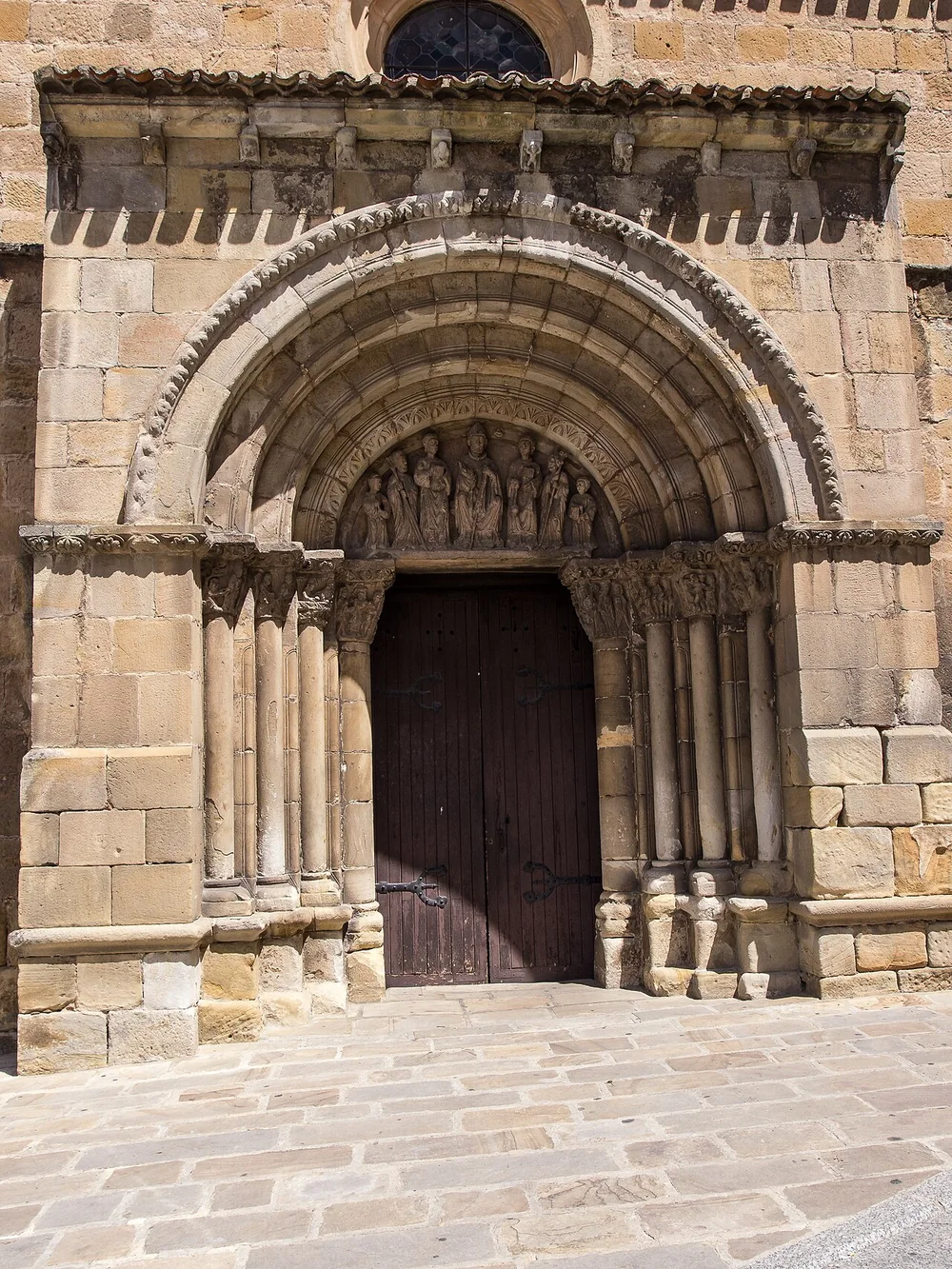
Walk around the church to compare portal and east end rather than stopping at the front. The west portal came from San Nicolás church and was moved here in 1908; look for the saint depicted as a bishop in its tympanum. This short stop fits the civic centre well, but interior access requires checking. An open door does not always mean sightseeing is available during worship.
The tower and long façade introduce civic architecture among the churches. Find a position that reveals proportions and window details. The building houses the Palace of Justice, and Soria Tourism states that its interior is not open to visitors.
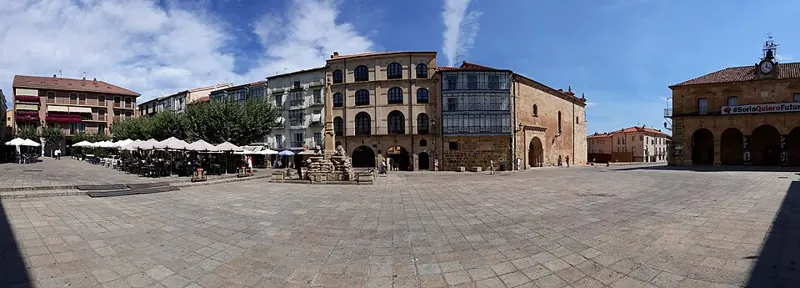
The square combines municipal architecture and cultural spaces at a comfortable scale. Compare the Audiencia and town hall façades before choosing a terrace or continuing towards the river. A cultural building does not mean an exhibition is always open: check the programme. The outdoor walk works without purchasing a ticket.
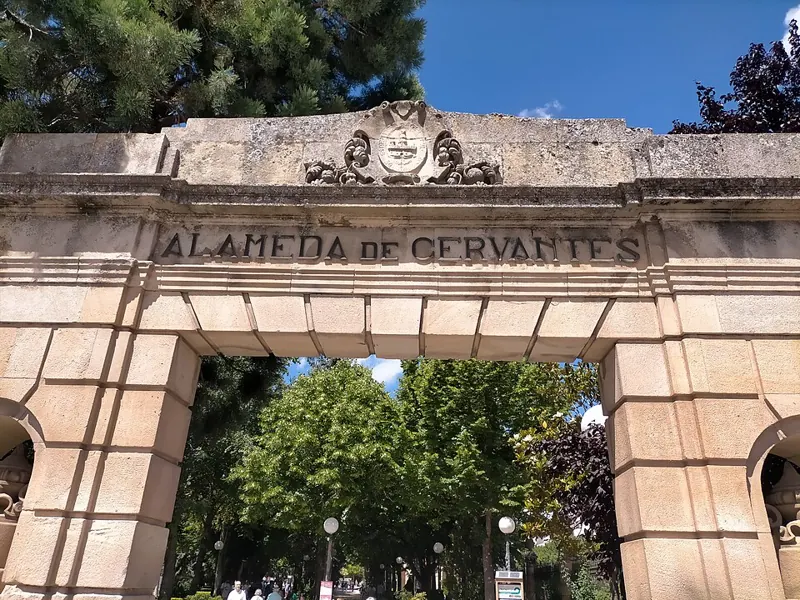
Locally known as La Dehesa, this park exchanges the centre’s stone for tree-lined paths. Use it as a real break: find a bench and observe planting and local life. It helps shorten the day with children or after travelling. Respect closures in bad weather rather than improvising a long Duero outing.
The co-cathedral marks the transition from centre to Duero scenery. Distinguish church entry from the cloister visit, which may have different arrangements. For Romanesque interest, explicitly check cloister access and allow time for its capitals. Religious services can alter access; do not build your schedule around assumed opening.
The arches change shape around the cloister; walking slowly reveals more than a single photograph. This is a heritage visit with opening hours, not a public through-route on the riverside. Check admission and closing before crossing over. Allow time to return, especially if also continuing towards San Saturio.
The hermitage on the rock is a dedicated Duero outing rather than another central corner. Assess steps, time and ground conditions for both approach and interior. The exterior view is worthwhile without entering. Check opening and return plans; bring layers or water for the season and avoid running out of daylight.
Restaurant combining cooking with an entertainment identity. Performances are not permanent: a table reservation does not guarantee a show. Check menu, seasonal mushroom dishes, allergens and availability; its website directs reservations to the telephone.
Central grill restaurant with bar, terrace and dining room. Its offer includes grilled meats and fish; check the current service menu and whether a roast needs advance ordering. Reserve and communicate allergies, especially when requesting alternatives to the usual menu.
Editorial selection based on the venues’ own websites, not a personal dining review or sponsorship. Check opening, menus, allergens and prices before visiting.
Options separate from the independent walk. The free tour is tips based. Reviewed listings advertise Spanish-speaking guides: this website’s language does not change the activity language. The complete tour advertises admission: check included monuments and itinerary before booking, avoiding duplicate tickets. Confirm meeting point, accessibility, date and conditions. Affiliate links may earn us commission when you book. Reviewed 19 October 2026.
Separate the upper centre from the Duero riverside. Check in before the square circuit and leave the river for another block. San Saturio needs a return-distance plan, not just outward directions.