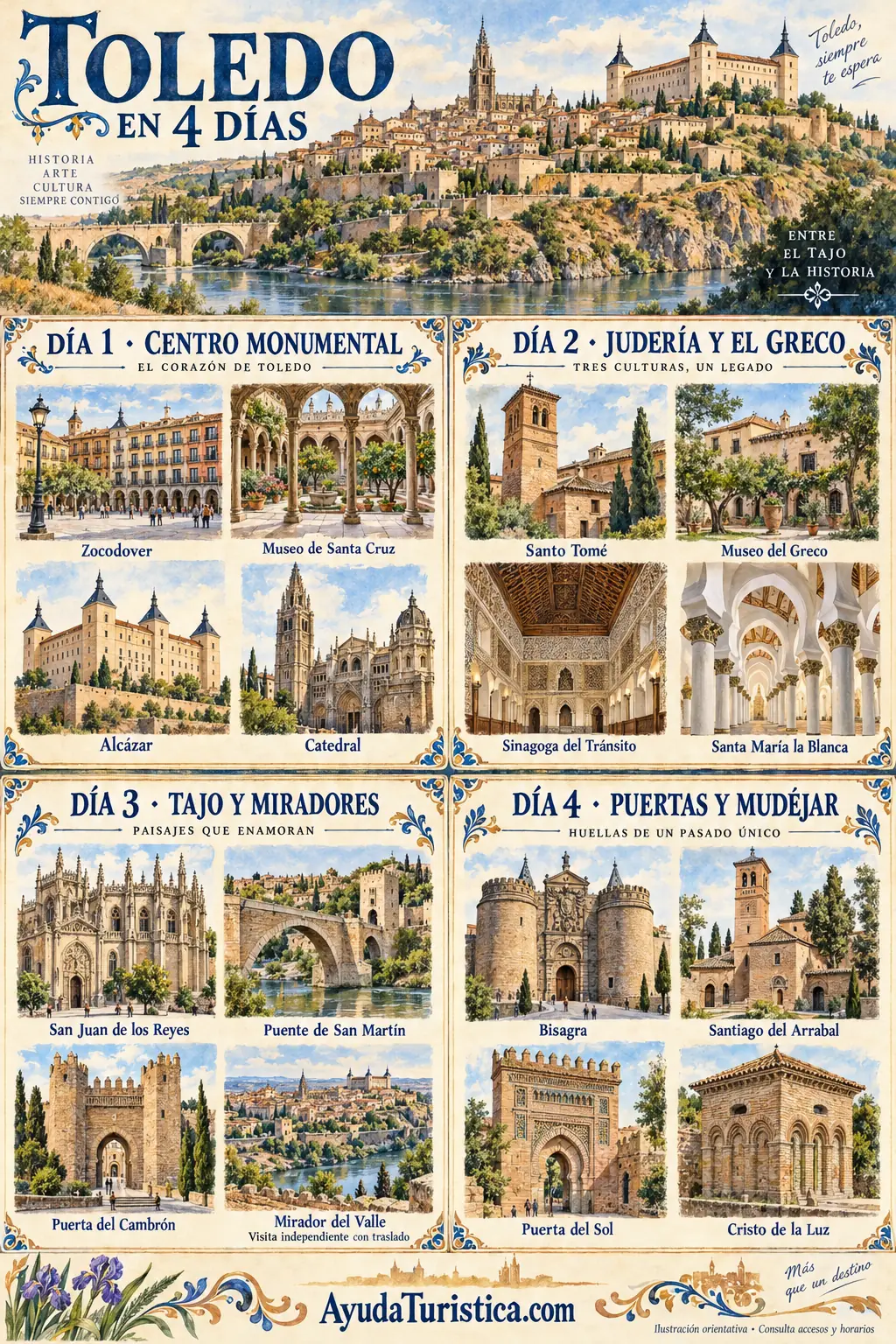
Santa Cruz Museum may have closed rooms: check the exhibition available. Allow time for the Cathedral or Alcázar; interior admission is not automatically included.
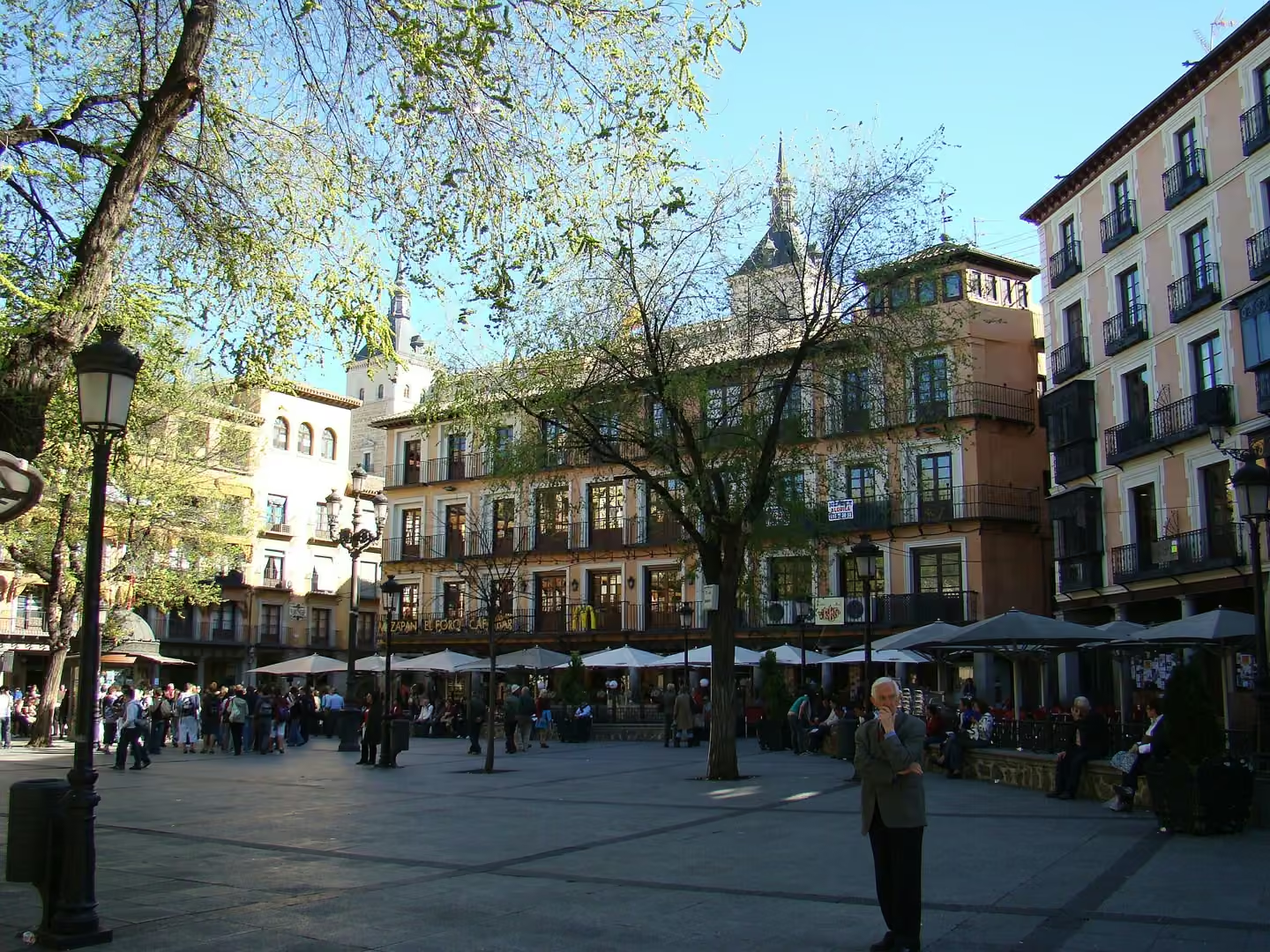
Zocodover is one of Toledo's main meeting places and a useful point for finding your bearings before entering the narrow streets. Rather than searching for a single monument, notice the façades and entrances that make the square a crossroads. From here you can connect the Alcázar area with the historic centre. Its appeal also lies in watching how the city gathers and moves.
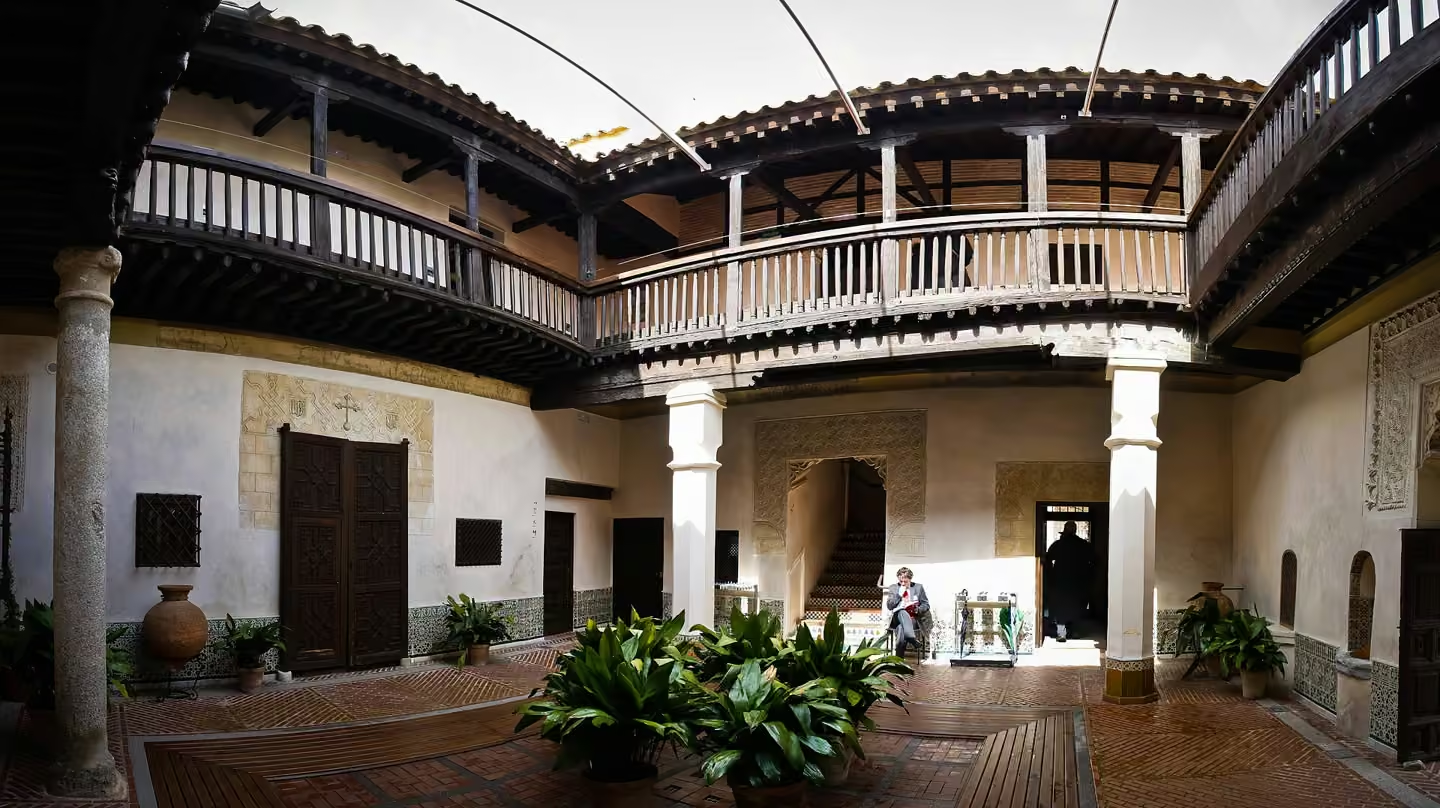
The Santa Cruz Museum occupies the former hospital associated with Cardinal Mendoza. Before studying the collections, pause to look at the building itself: its present cultural role overlays an earlier charitable function. The visit invites you to compare architecture and objects, the museum's container and its contents. Check which galleries and exhibitions are accessible, as access may differ between sections.
The Alcázar dominates Toledo from one of its highest positions. Its massive outline helps you find your bearings even after wandering through narrow streets. Today it houses the Army Museum, connecting military collections with Spanish history. Before entering, compare the monumental building with the small houses around it: the difference in scale is itself a way of expressing power.
Construction of Toledo Cathedral began in 1226, with Gothic work continuing into the late fifteenth century. Its scale reflects the city's religious and political importance. Outside, compare the entrances and tower; inside, allow time for the choir and chapels rather than rushing through everything. The sacristy contains El Greco's Disrobing of Christ, offering another connection between the artist and the city.
Santo Tomé combines early fourteenth-century architecture with one of El Greco's best-known works, The Burial of the Lord of Orgaz. Outside, find the Mudejar tower built in brick and masonry. If you enter to see the painting, compare the mourners below with the scene above. The visit offers two complementary readings: the historic church and the artwork it contains.
This museum explores El Greco and his relationship with Toledo in the early seventeenth century. It is more than a stop for recognising famous paintings: it places the artist within the city and his own time. Notice how he organises bodies, colour and glances. When you leave, look again at the surrounding streets; the visit may change the way you read Toledo.
The Tránsito Synagogue, also named after Samuel ha-Leví, houses the Sephardic Museum. A visit explores Jewish history in Spain and a tradition that continued beyond the expulsion. Look at the decoration as a language of shapes and inscriptions rather than simply ornament. Allow time to connect the building with the museum objects and the streets of the surrounding Jewish Quarter.
Santa María la Blanca preserves the memory of a former synagogue, rebuilt in the thirteenth century and later converted into a Christian church. Inside, repeated arches and supports create a space quite different from a Gothic church. Let your eyes follow the aisles before studying individual details. Its history illustrates how Toledo's buildings have changed their uses and meanings over time.
The Valle viewpoint is a separate outing across the river. Do not follow this section as a continuous walk: plan transport and your return, or finish at San Martín bridge.
The Catholic Monarchs commissioned San Juan de los Reyes to commemorate the Battle of Toro in 1476. Juan Guas shaped one of the major examples of Hispano-Flemish Gothic architecture. Notice the rich decoration and the church's height before moving into the quieter atmosphere of the cloister. The architecture combines a religious foundation with a political statement by the monarchy.
Cambrón Gate was also known as the Jews' Gate because of its connection with the Jewish Quarter, and as Saint Leocadia's Gate. Its appearance reflects rebuilding in the second half of the sixteenth century over a much older entrance. Study it as a small building rather than just an arch. Crossing it makes the boundary between the walled city and its surroundings tangible.
San Martín Bridge already existed by the middle of the fourteenth century and was rebuilt after damage during the war between Peter I and Henry II. Its five arches cross the Tagus on the western side of the city. Pause where you can observe the piers and current without blocking the walkway. The river protected Toledo but also required bridges connecting it to the outside world.
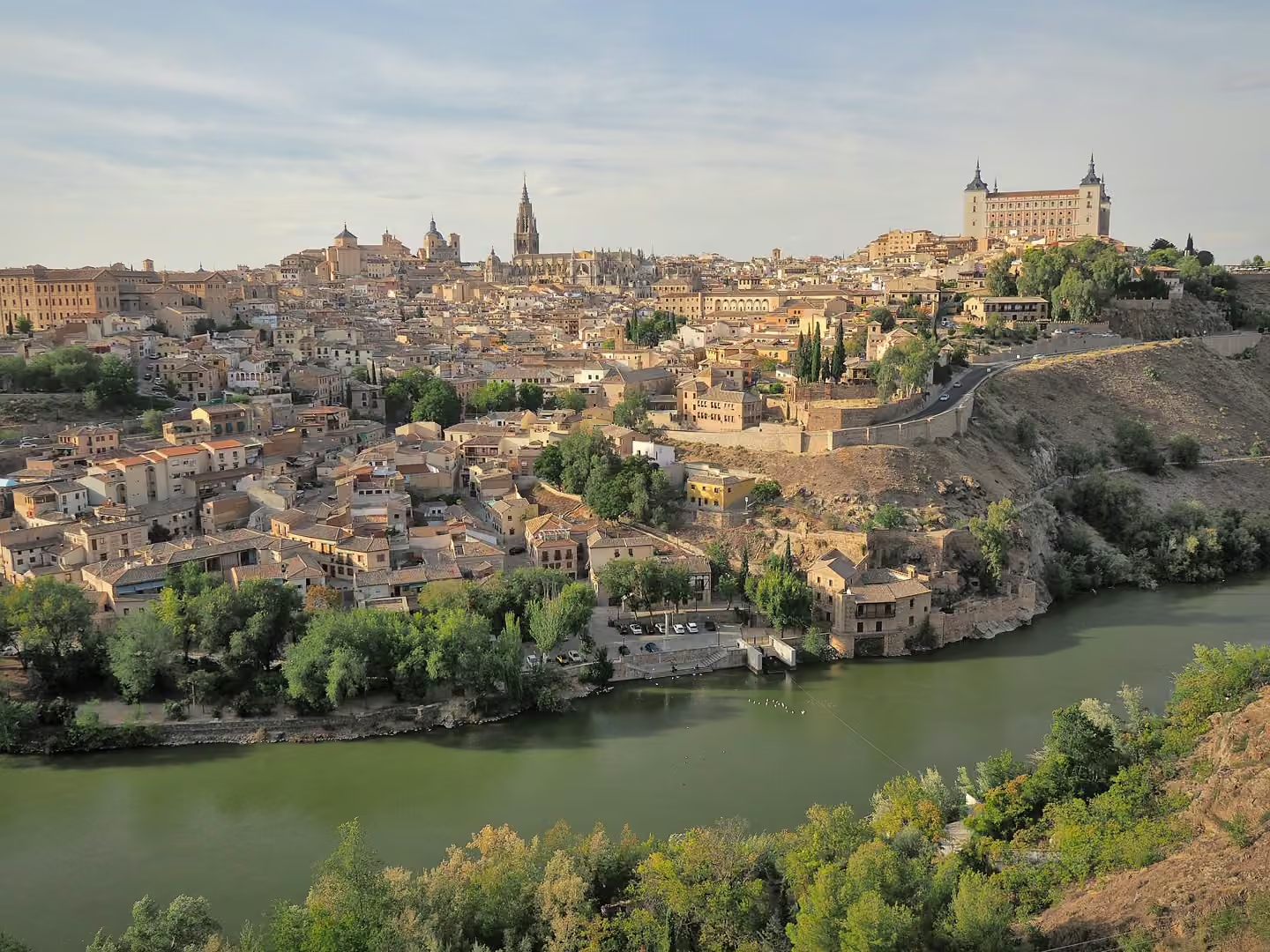
From Mirador del Valle, Toledo stops being a maze of streets and becomes a complete shape. Follow the bend of the Tagus with your eyes, then locate the Cathedral and Alcázar above the rooftops. Distance reveals the city's natural defences and steep terrain. This is a place to put the sights you have visited into perspective, rather than simply take a photograph.
Bisagra turns the entrance to Toledo into a monumental statement. Although it retains remains of Islamic origin, it was rebuilt under Charles V and Philip II following designs by Alonso de Covarrubias. Notice the mass of its towers and the space within the passage. The gate combines access control with a display of authority, announcing the city's importance as well as protecting it.
Santiago del Arrabal, built in the second half of the thirteenth century, is a key example of Toledo's Mudejar architecture. Brick and masonry form bands that give rhythm to the walls. Find the three apses and their rows of arches, where structure becomes decoration. Its position beside Bisagra helps evoke the life of the suburb around the city's entrance.
Puerta del Sol is one of the historic entrances illustrating Toledo's Mudejar architecture. Close to Cristo de la Luz, it links the climb towards the centre with the edge of the city walls. Notice the combination of defensive form and decorative arches. This was not an isolated doorway but part of a wider system controlling access to the city.
Cristo de la Luz preserves a former mosque built in the year 999. Do not be misled by its modest size: it is an important witness to the legacy of Al-Andalus in Toledo. Look at the brickwork and the architectural complexity achieved within a small space. The later Christian phase adds another layer to a history that can be read in the building itself.