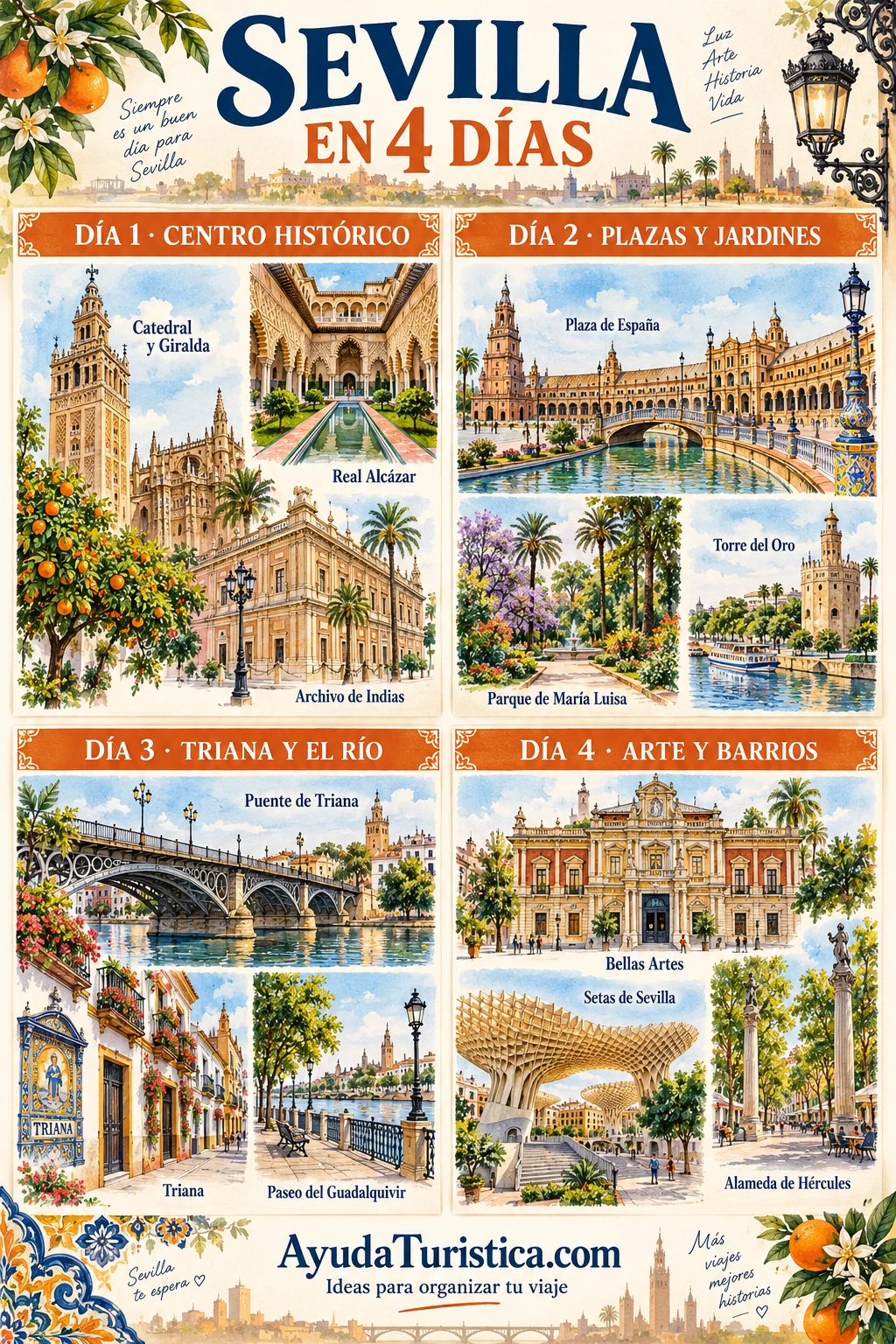
The Cathedral, Giralda, Real Alcázar and Archive of the Indies reveal different chapters of Seville in one walk. The Giralda is the cathedral’s bell tower. The ensemble has been a World Heritage Site since 1987. From the square, compare the tower and the cathedral: they are not buildings from a single period.
Charles III established the Archive of the Indies in 1785 to gather records of Spain’s colonial administration previously kept in several archives. It helps explain Seville’s historical connections with the Americas. It belongs to the ensemble listed as World Heritage in 1987.
The Real Alcázar brings together palaces and gardens from different periods and remains an official royal residence in Seville. Its character comes from the meeting of spaces and styles. Allow separate time for the interior; this outdoor walk does not replace a palace visit.
Casa de Pilatos is a palace that brings together Mudéjar traditions and Italian Renaissance forms. In its courtyards, look at the relationship between tiles, arches and sculpture: their combination helps explain Seville’s domestic architecture. Visiting the interior is separate from this walk across the square.
The lower section of the Torre del Oro was built in 1220–1221 under Almohad rule. The tower has three sections: look at how their shapes and proportions change. Its position beside the Guadalquivir helps explain the river’s role in the city’s defences.
The Maestranza helps explain bullfighting tradition and the riverside Arenal district. Distinguish the bullring from the nearby theatre sharing its name. Walking outside, visiting the museum and attending an event are different activities.
Triana Bridge is officially named Isabel II and was completed in 1852. Crossing it, notice how it connects banks with different identities. Its structure belongs to the heritage of iron architecture. Pause without blocking pedestrians to look at the river.
Triana retains an identity tied to the opposite bank of the Guadalquivir and its ceramics tradition. Observe tiles and workshops as evidence of a craft, rather than merely tourist souvenirs. The Ceramics Centre offers a separate visit to explore it further.
Aníbal González designed Plaza de España for the 1929 exhibition. Ceramics are part of the architecture: notice the benches, bridges and details before taking the wide view. The square opens towards the Guadalquivir, recalling the historic connection with the Americas.
Private gardens of the San Telmo Palace became this public park, opened in 1914. Its history explains the combination of designed nature and monumental spaces. Alternate the main avenues with breaks while respecting planted areas.
The museum occupies a former convent: courtyards, church and staircase contribute to the experience alongside paintings. Notice how light changes between these spaces. Choose a few galleries and allow time separate from the outdoor walk to enjoy the collections.
This sixteenth-century palace houses artworks collected by the Countess of Lebrija. A visit connects a home with its collector’s taste. Much of its interest is inside: check which spaces each ticket option includes.
The Setas bring contemporary architecture, a market, viewpoint and archaeological remains together. These are different experiences with separate access arrangements. Observe the structure from the square first, then decide whether to visit the viewpoint or Antiquarium.
Las Dueñas combines gardens, courtyards and rooms of a historic residence. Its interest lies in moving between outdoor and indoor spaces and observing their relationship. Admission is required and is separate from an exterior neighbourhood walk.
The columns of Hercules and Julius Caesar help interpret the Alameda. Notice how monumental features coexist with an everyday meeting place. It is more than a photo stop: it also offers a chance to observe neighbourhood life and pause.
The basilica houses the revered image of the Esperanza Macarena and helps explain the neighbourhood’s devotion. Visiting also means entering an active place of worship. Respect silence and distinguish religious access from other visitor spaces.