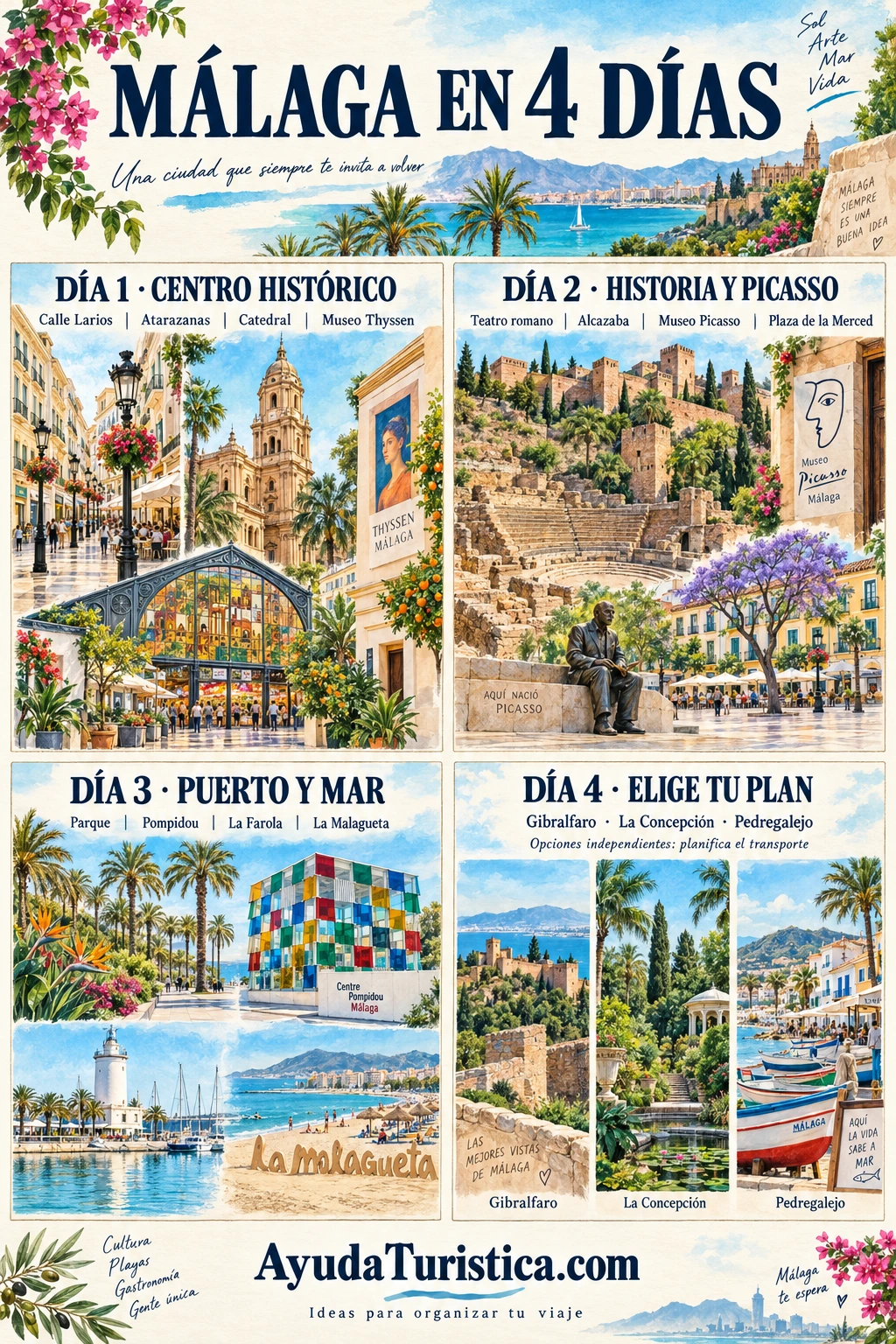
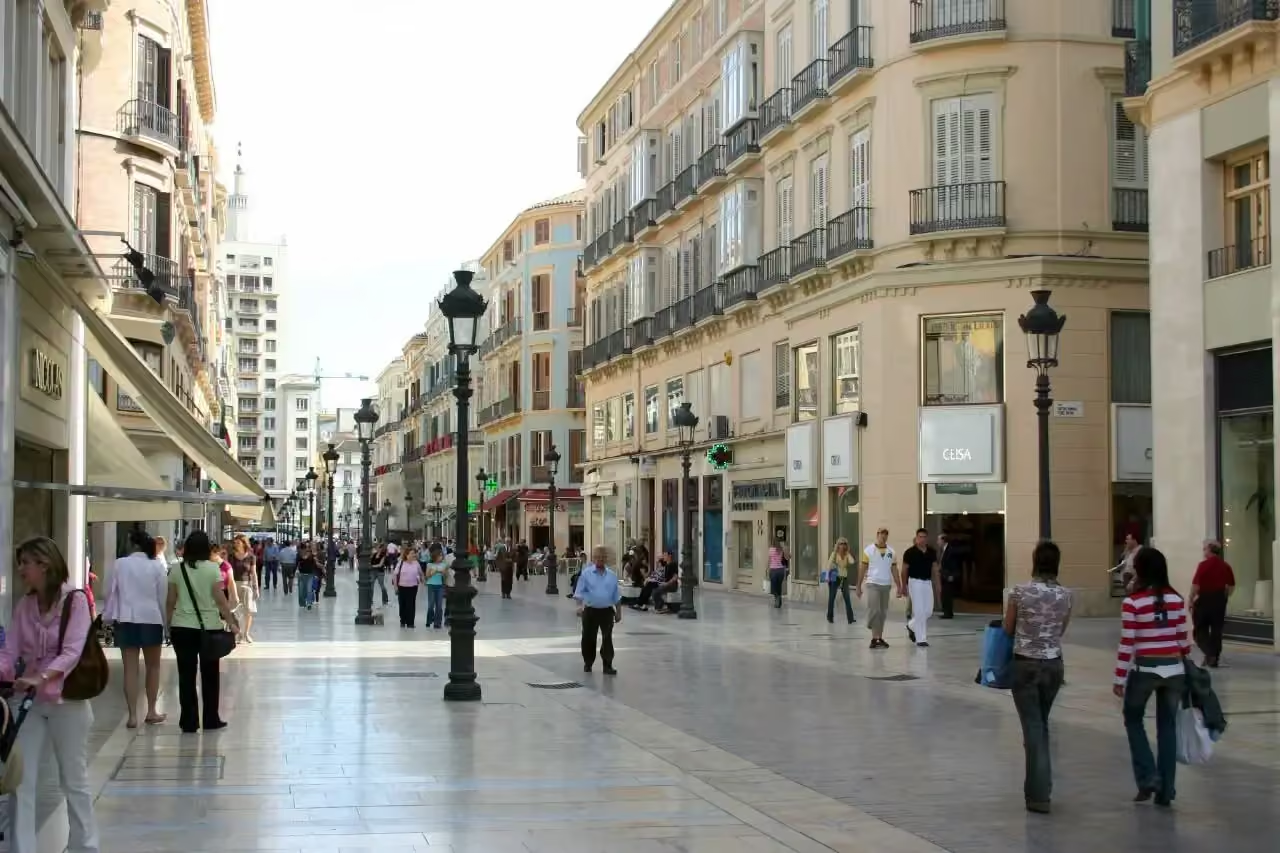
Calle Larios is more than a shopping street. Eduardo Strachan designed its buildings with symmetry and rounded corners, creating a distinctive urban image. Look above the shop windows and compare the rhythm of balconies and façades. Then glance into side streets: the contrast between this broad avenue and the old town’s tighter fabric is part of its interest.
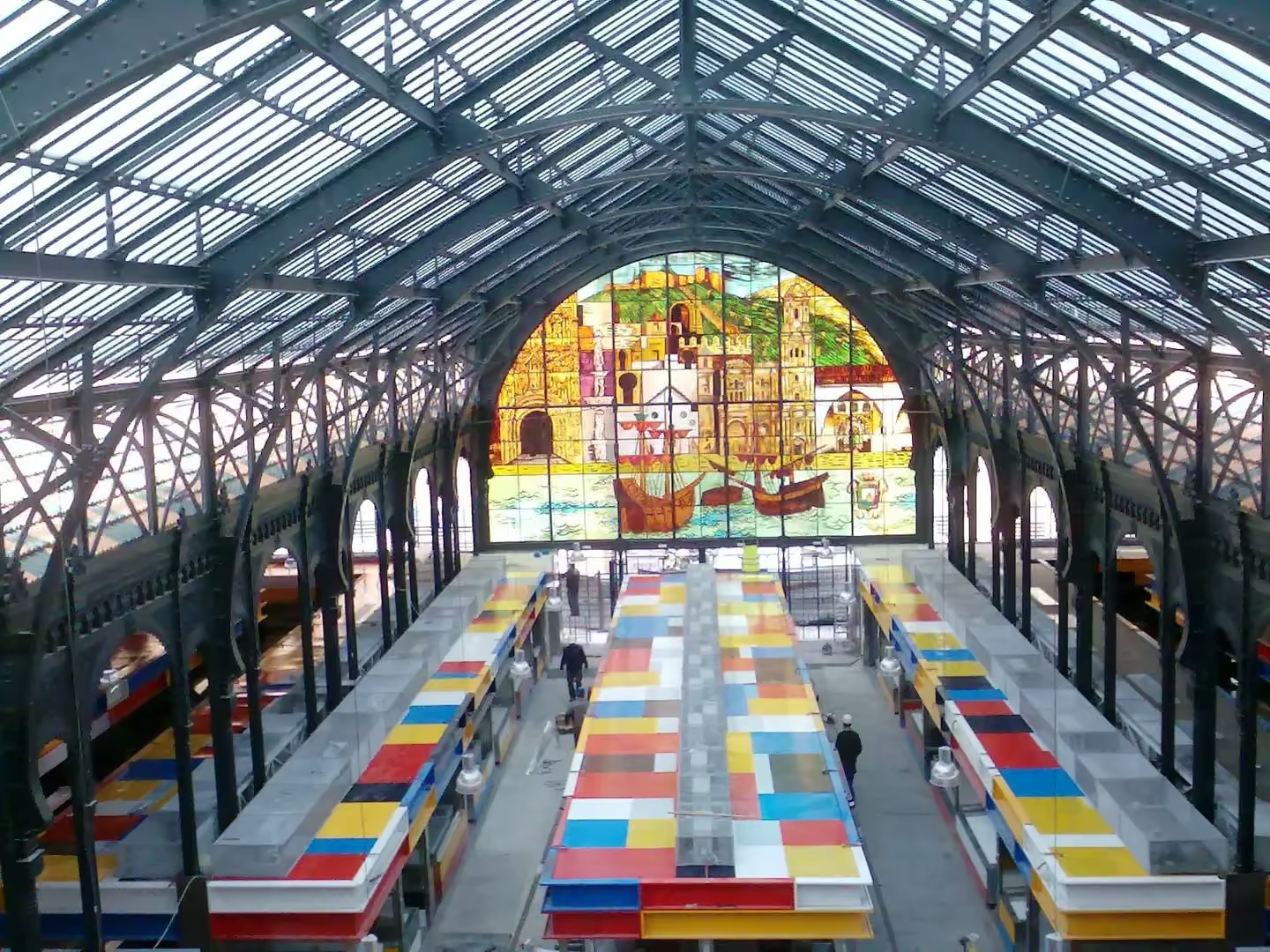
The name Atarazanas recalls this site’s naval past. The former shipyards stood outside the medina beside a shoreline different from today’s. Look at the historic gateway and imagine an environment devoted to building boats. The market adds another chapter of urban life. During your visit respect sellers and shoppers at work and keep the aisles clear.
The Carmen Thyssen Museum focuses especially on Spanish painting of the nineteenth and early twentieth centuries. Its works introduce landscapes, scenes and ways of seeing from that period. Choose one painting, first identifying its subject and then how it uses colour and light. Relating these images to Andalusian surroundings enriches your walk without treating them as literal photographs of reality.
Work on the Cathedral began in 1528 and brought together contributions from several architects of the Andalusian Renaissance. Its long history means it should not be read as one person’s creation. Compare the overall mass with doorway and window details. If you enter, notice the change of scale beneath the vaults; the interior complements the image seen from surrounding streets.
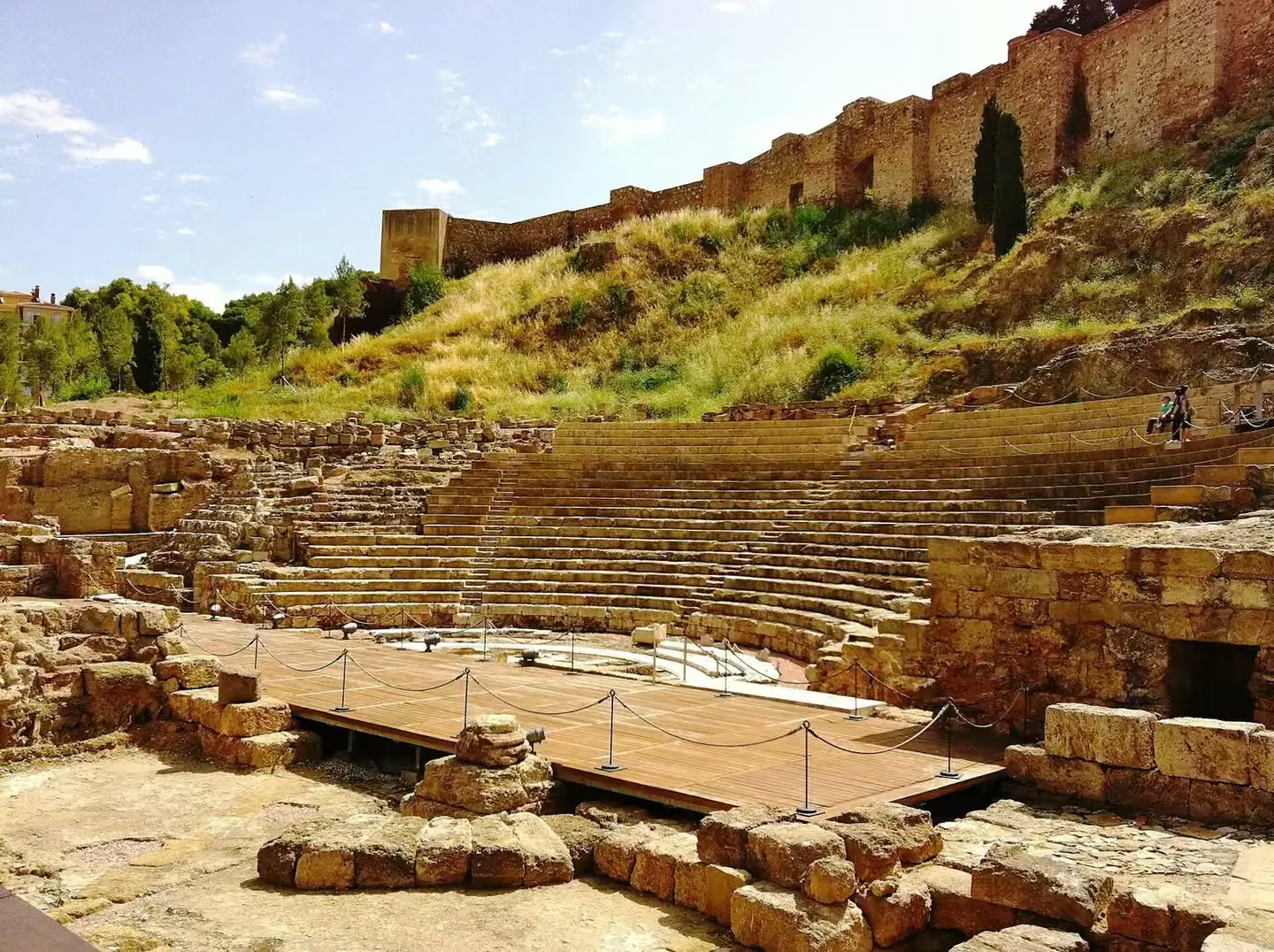
The Roman Theatre dates from the early years of Augustus’s rule and stands at the foot of the Alcazaba. Their proximity brings two different periods into one landscape. Observe the seating and its relationship with the slope: the terrain also played a role in the architecture. Imagine the audience looking towards the stage to understand the building as a gathering place.
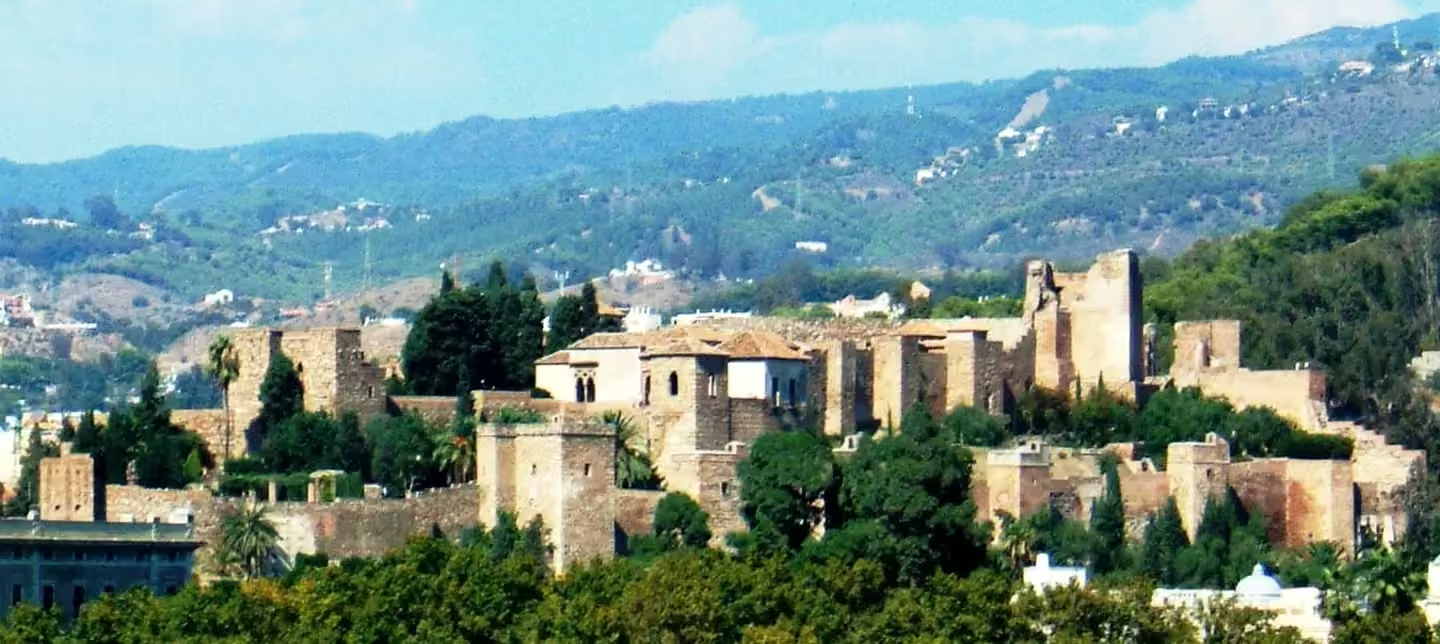
The Alcazaba uses terrain and gateways as part of its defence. At the Bóveda Vaída gateway, the passage forces a turn and hides the exit from direct view: this bend made entry more difficult. Look for changing axes and views between gateways and courtyards. In this way you can understand the building through movement, not only by admiring its walls from outside.
The Málaga Museum brings together the Fine Arts and Provincial Archaeological Museum collections. This combination lets you explore very different periods in a single visit. Its paintings include nineteenth-century artists and the Málaga school. Choose a few objects to study slowly, then relate what you have seen to the city outside: the museum can provide context for your whole walk.
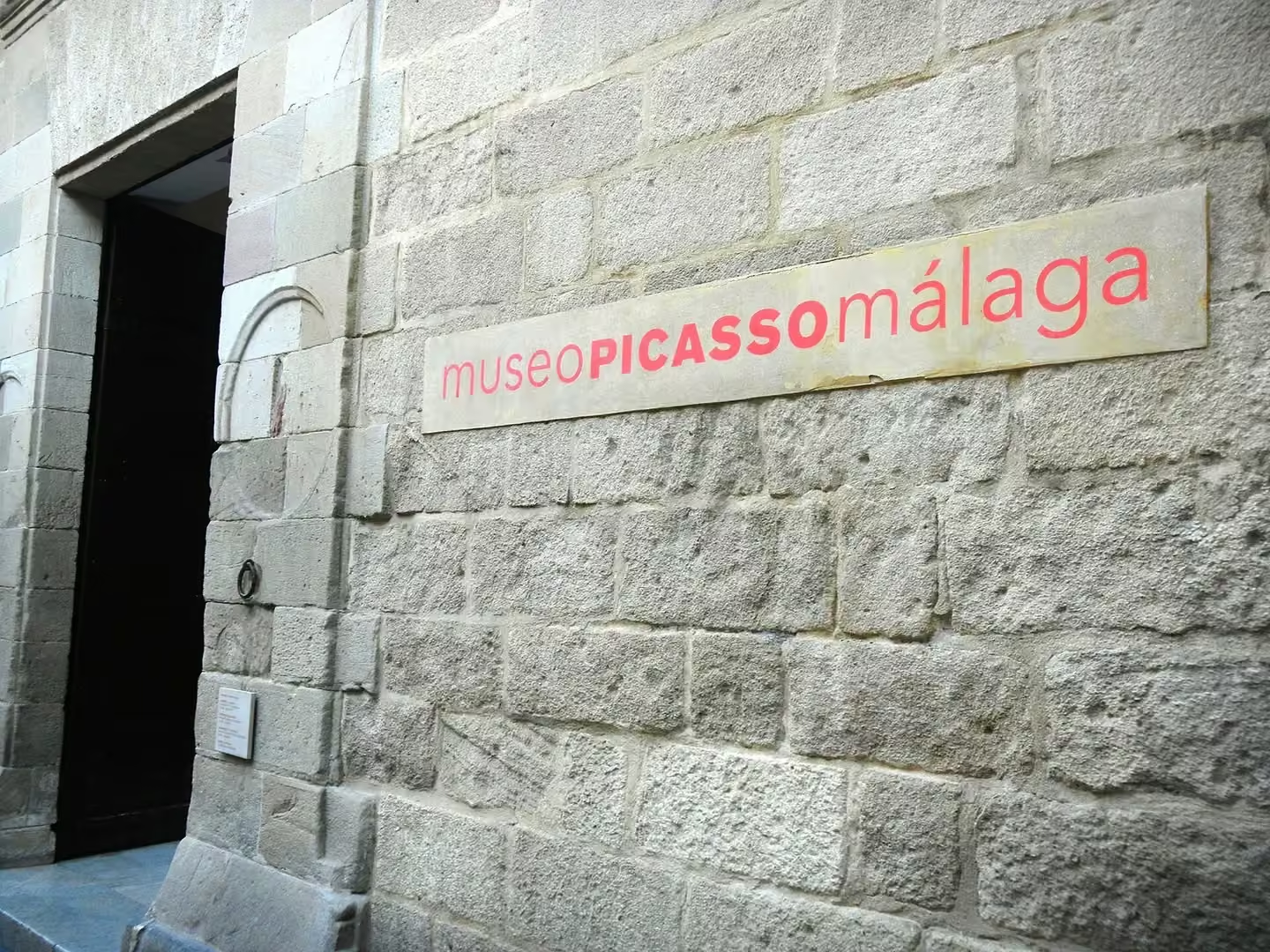
The Picasso Museum sits within the old town, near the Roman Theatre and Cathedral. This proximity connects art with the walk instead of separating the museum from the rest of Málaga. Before entering, observe the building and surrounding streets. Inside, take time to compare ways of depicting a face or body: a slow visit reveals more than a checklist of works seen.
Plaza de la Merced connects the urban walk with Picasso’s childhood; he was born in Málaga in 1881. His birthplace at number 15 preserves that relationship between artist and city. Take in the surrounding façades before focusing on one building. The square helps you imagine the everyday setting of the painter’s early years and link it with a museum visit.
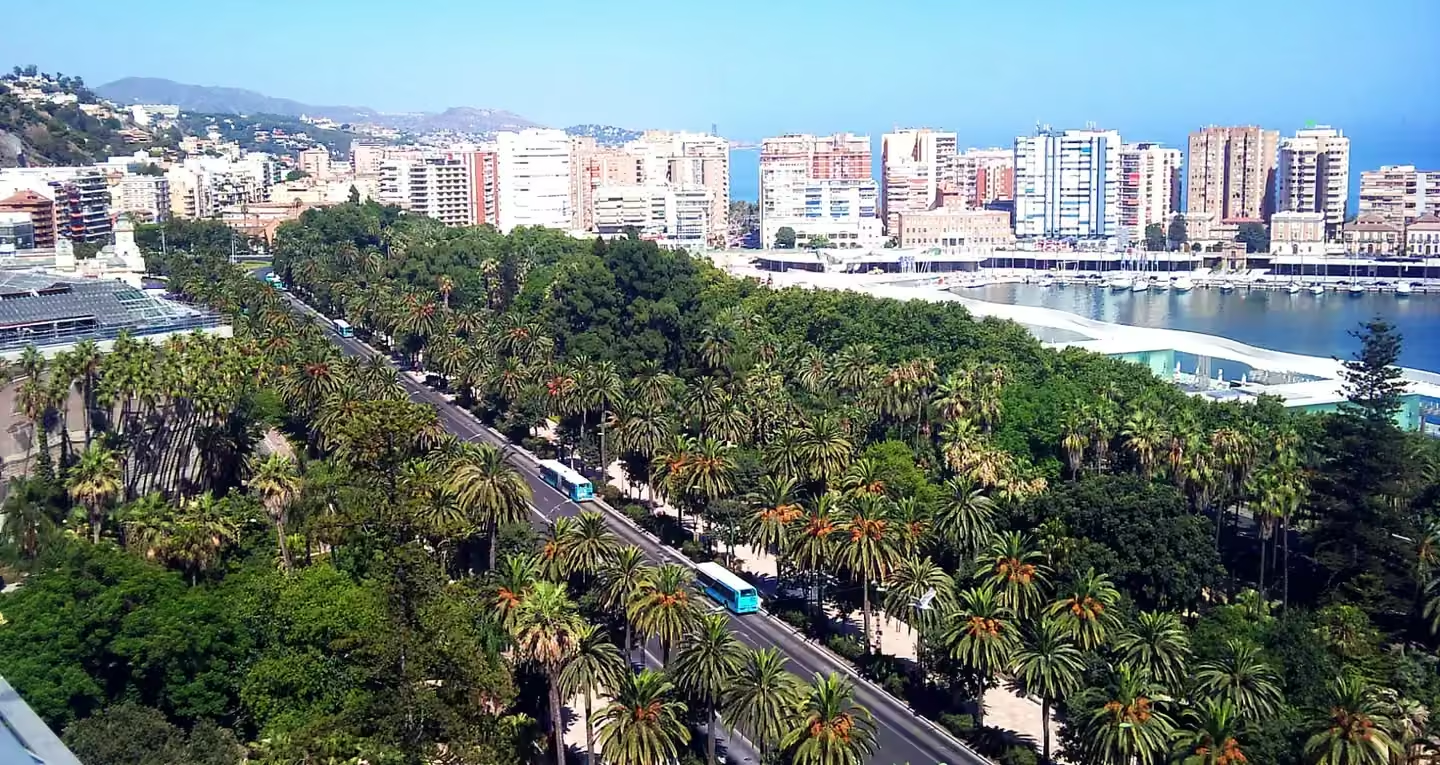
Málaga Park developed on land reclaimed from the sea and was received by the city in 1897. That history connects its vegetation with the changing coastline. Walk slowly through a section, comparing trees, shade and views. More than a space between monuments, the park helps explain how the city incorporated a landscaped promenade into its seafront.
Centre Pompidou Málaga stands on the waterfront beneath the distinctive glass cube reworked by Daniel Buren. It brings contemporary art into the harbour walk. Notice how colours and reflections change as you move around the building. The exterior is only one part of the experience: check the programme before deciding how much time to devote to the exhibitions inside.
La Farola was built in 1816–1817 to designs by Joaquín María Pery. Later alterations brought a new lighting apparatus. Its silhouette recalls that a port required navigation and safety as well as trade. Look at the tower from a distance to appreciate its relationship with the promenade and sea. An exterior visit should not be taken to include access inside.
La Malagueta is an urban beach close to the historic centre. This proximity lets you move from monumental streets to the seascape within the same walk. Follow the beachfront and compare the line of buildings with the open horizon. Swimming is not necessary to enjoy this stop: it is also a place to rest and understand Málaga’s everyday relationship with the sea.
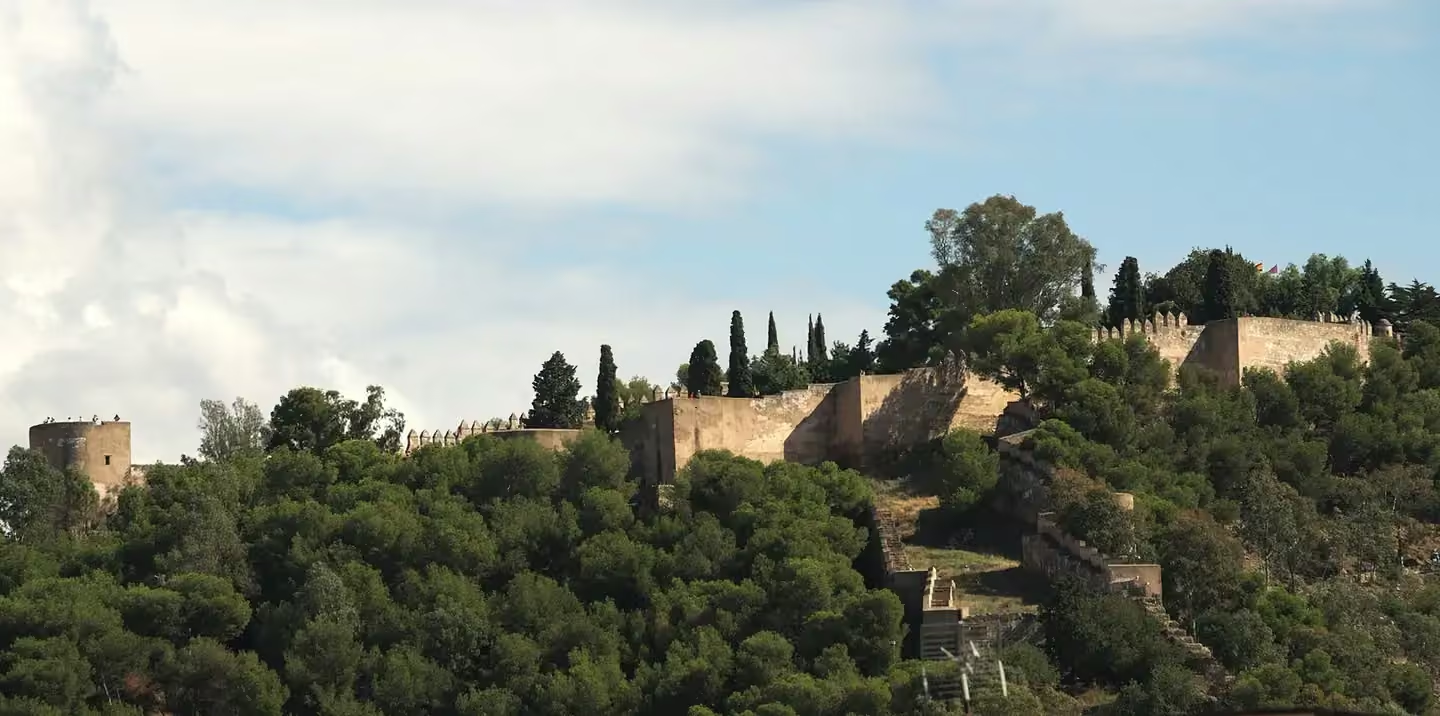
Gibralfaro overlooks Málaga from a hill whose height explains its strategic position. Before concentrating only on the views, observe the elongated enclosure and how it adapts to the ground. The walls make the terrain part of the defence. Allow time for the climb and the visit; listening from a quiet stopping place helps connect the fortress with the port and city.
La Concepción was created in 1855 and preserves an important collection of plants and historic trees. The pace changes here: look at heights, leaf shapes and layers of vegetation rather than searching only for a photograph. The garden combines cultivated nature with history. Allow time for an unhurried walk and consult its guidance to choose a route suited to your abilities.
Pedregalejo forms part of Málaga’s urban coastline and offers another perspective on the seafront. Rather than searching for a monument, notice how beach, promenade and neighbourhood life connect. Spend part of the walk looking towards the water and another part towards the streets. The experience differs from the historic centre and helps build a broader picture of the city.