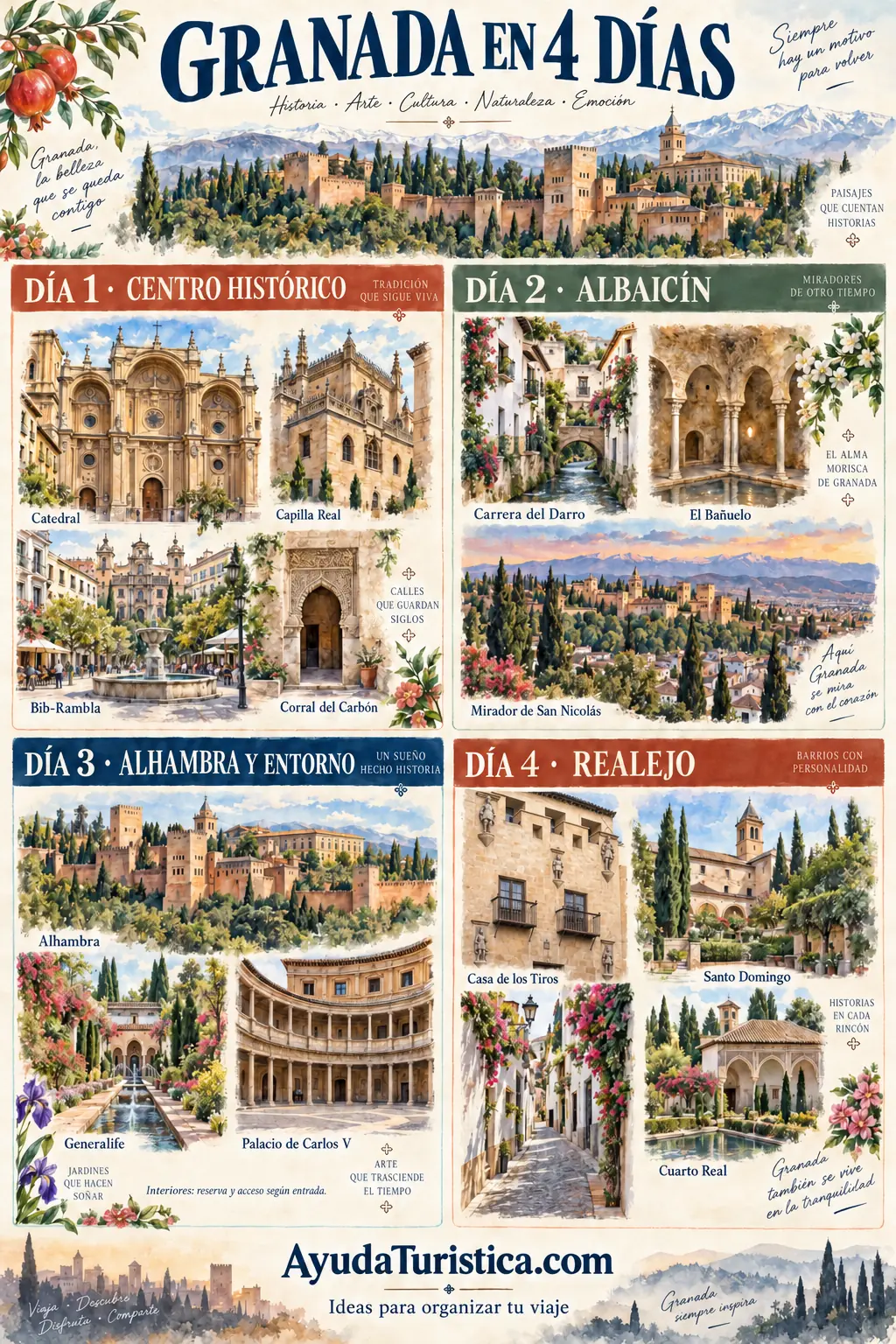
Four area-based itineraries in Granada with photos, directions and optional indoor visits.
The Alhambra route includes paid areas. The Generalife and Nasrid Palaces require the appropriate ticket; check the reserved entry time. Without admission, follow only the publicly accessible approaches and viewpoints.
Illustrated overview in Spanish. Follow the detailed routes below for practical information; the artwork is not a geographical map.
Pick one area per day and shorten the plan whenever you wish. Indoor visits are optional; this is not a promise that every venue fits into one day.
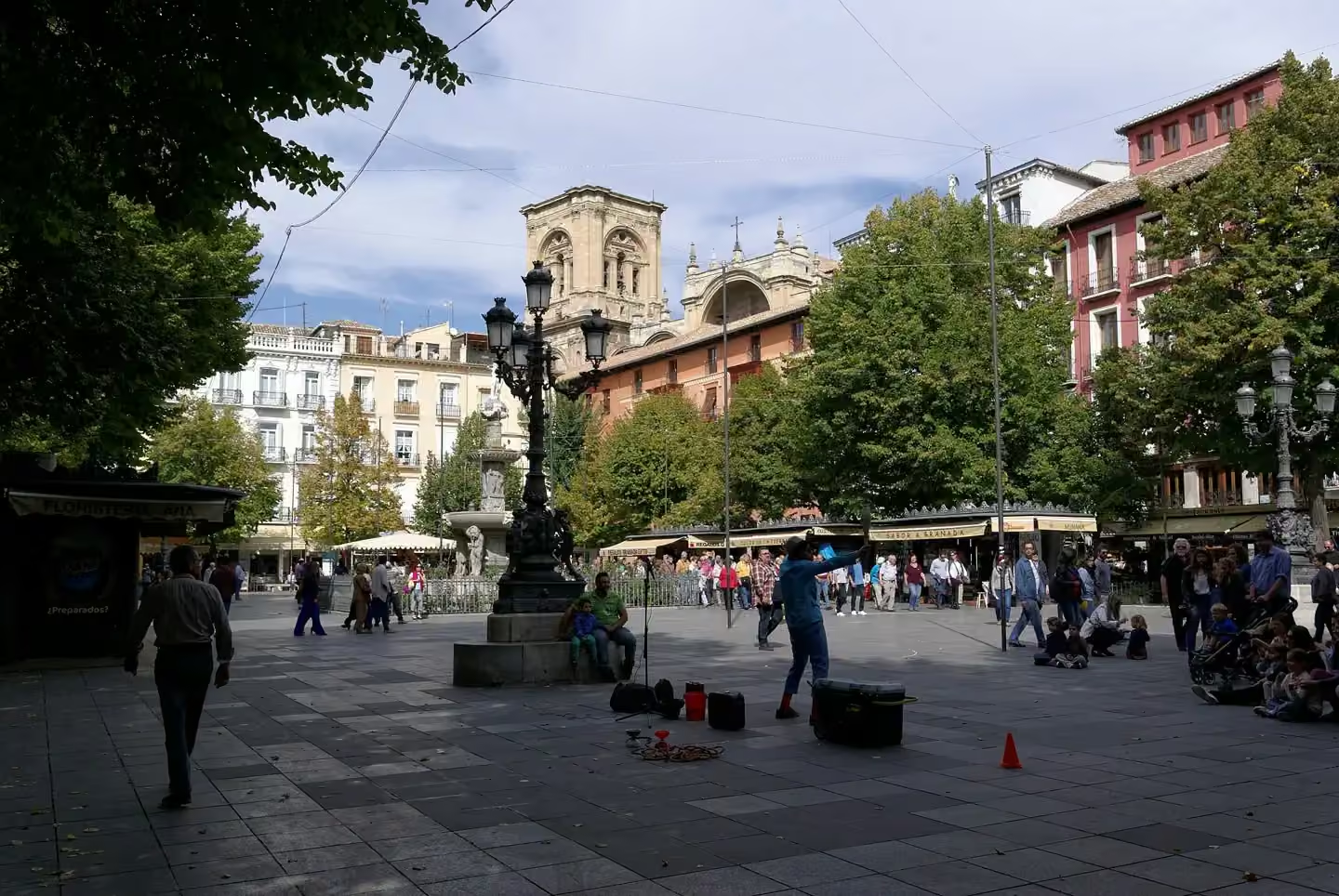
Bib-Rambla provides an open pause among the central streets. Its terraces and flower stalls remind you that discovering Granada also happens in everyday spaces, not only inside monuments. Walk around the perimeter before choosing a place to sit and notice how the perspective changes. From here you can continue towards the Cathedral while remaining within the neighbourhood’s lively commercial setting.
The Cathedral belongs to Charles I’s vision of an imperial city. Its central position lets you connect your visit with the Royal Chapel and the old trading area of the Alcaicería. First take in the scale of the façade from the square, then look at the doorway details. Exterior and interior offer different experiences, so allow time for both if you choose to enter.
Isabella and Ferdinand ordered their burial chapel in Granada in 1504. Their remains were transferred to the Royal Chapel in 1521 after a temporary burial near the Alhambra. A visit helps explain the city’s political and personal significance for the Catholic Monarchs. Although it stands beside the Cathedral, recognise it as a monument with its own history and a distinct visit.
Yusuf I founded the Madraza in 1349 during the Nasrid period. Its position on Calle Oficios, beside the central monumental district, reminds us that Granada was also a place of teaching and knowledge. Pause to distinguish this building from its religious and commercial neighbours. Interior visits depend on the programme, but its history already adds another dimension to your walk through this area.
The Corral del Carbón preserves an important trace of fourteenth-century Granada. Before moving on, stop at the entrance: its large pointed horseshoe arch brings together geometric patterns, plant decoration and writing. These details turn a doorway into an artistic statement. Then compare that richness with the restrained interior space; the contrast helps you appreciate the importance of the threshold.
Plaza Nueva is a useful landmark for finding your way around Granada’s historic centre. Before continuing, look at its edges and the streets leading away: a square is also defined by the journeys it connects. This space provides a pause between indoor visits and urban walks. Find somewhere clear of passing traffic to listen and choose your next section of the route.
Carrera del Darro offers another way to explore Granada: following the river and noticing where water, buildings and slopes meet. This is a walk for pausing, rather than rushing between monuments. Alternate your view between street level and the heights above. In narrow sections keep the way clear, and listen to the audio from a safe stopping place instead of blocking the route.
El Bañuelo preserves eleventh-century Arab baths, among the oldest surviving monuments of Islamic Granada. Their value also lies in how much of the complex survives. As you visit, notice the progression between rooms and the light entering from above. Thinking of bathing as part of everyday life helps you look beyond the palaces and towards the people who inhabited the city.
The San Nicolás viewpoint brings the Alhambra and Granada’s landscape together in one view. After the climb, spend a few minutes identifying the different volumes rather than taking only a photograph. Distance helps reveal the complex as a small city. Share the viewpoint with other visitors and allow time for an unhurried descent through the neighbourhood’s streets.
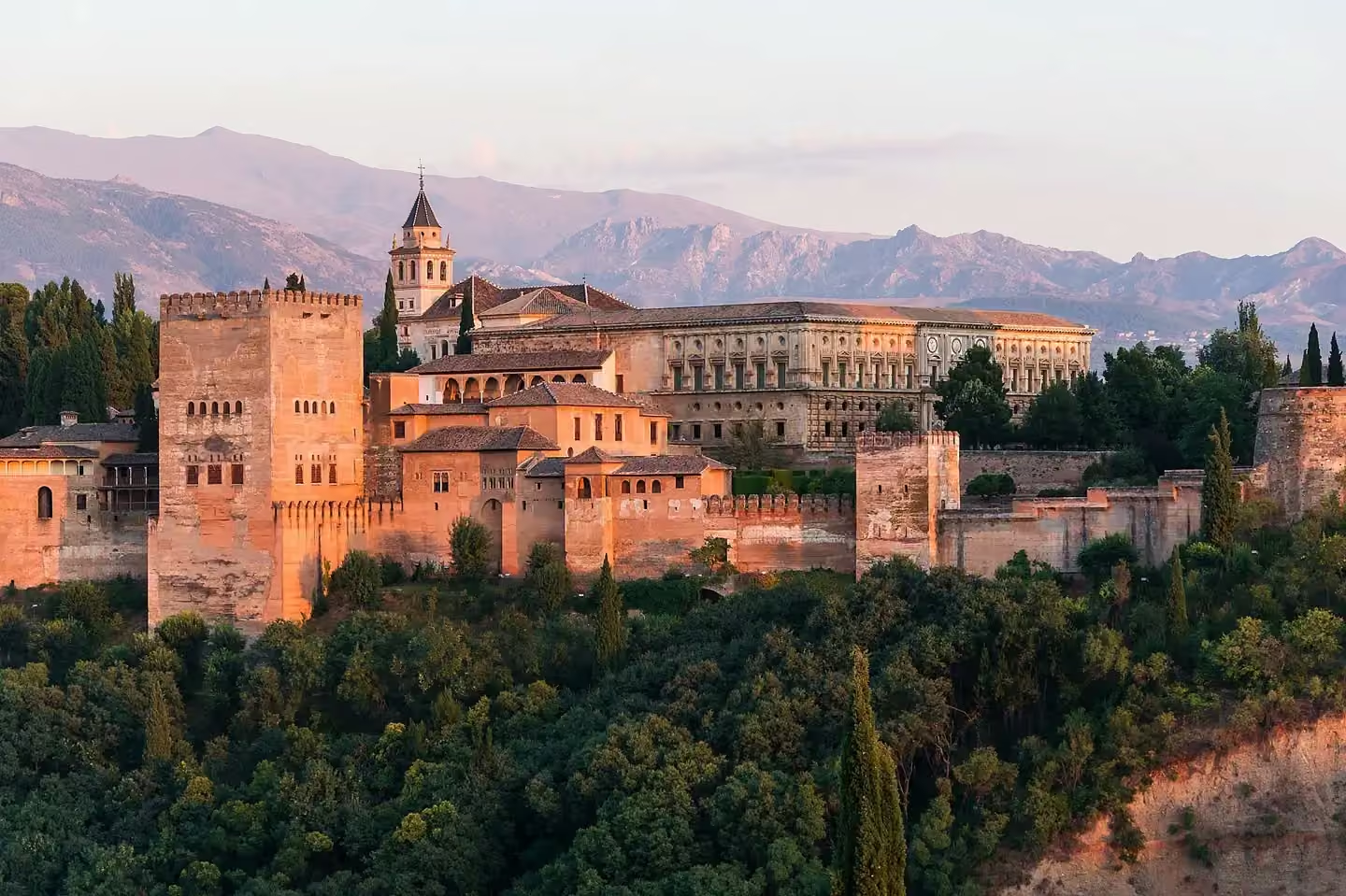
The Alhambra is best understood as a complex of spaces for government, residence and defence rather than one single palace. Its history includes Nasrid buildings and later additions, including the palace Charles V decided to build after his visit in 1526. Compare courtyards, doorways and perspectives along the route. This variety reveals different periods instead of reducing the visit to one famous image.
Charles V decided to build this palace after visiting Granada in 1526, following his marriage to Isabella of Portugal. Its presence within the Alhambra introduces another period and another way of expressing power. Observe the imposing façades and the change of atmosphere inside the courtyard. Comparing it with the Nasrid buildings helps you read the different historical layers of the complex.
The Generalife reveals the relationship between residence and landscape in Nasrid Granada. Here the garden is part of the architecture, shaping the walk and creating places to rest. Notice how paths, plants and water organise the views. Give it its own time within your visit to the complex, rather than treating it merely as a passage towards the palaces.
The Carmen de los Mártires was conceived as a garden of gardens, with French, English, landscape and Spanish or Granadan designs. The composition has changed: the Spanish Garden disappeared in 1960, and other original styles are now difficult to recognise. Walk slowly and compare the surviving geometry, planting and views to understand the design and its transformations.
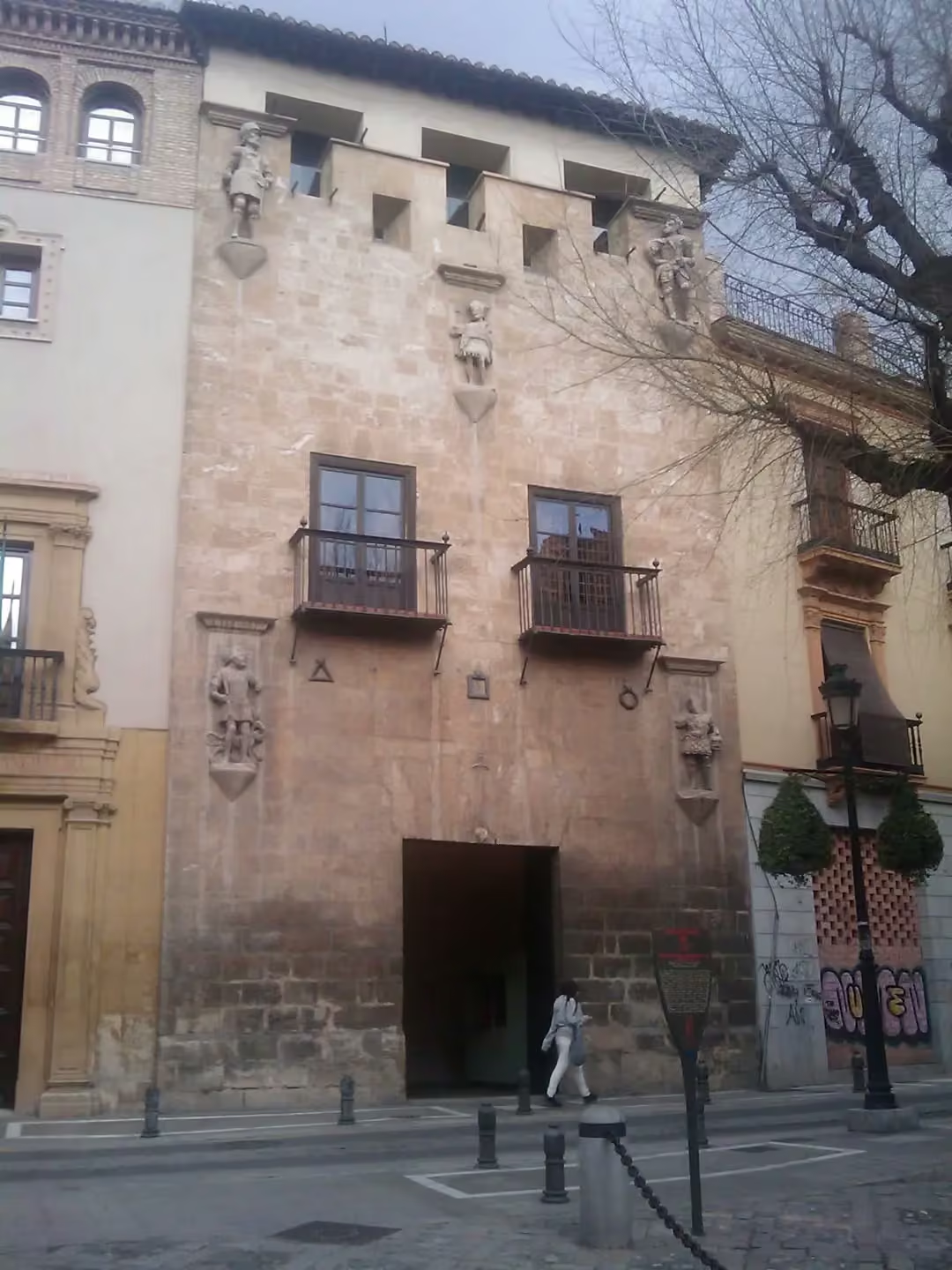
The name Casa de los Tiros refers to the artillery pieces projecting from the top of its tower. That detail gives a defensive appearance to a house that also invites you to explore Granada’s cultural memory. First look at the top of the façade, then at the rest of its composition. The building itself is part of the museum experience.
Santo Domingo follows Gothic models, with ribbed vaults and a raised choir at the rear of the church. Inside is the chapel of the Virgin of the Rosary, part of which extends above Cobertizo de Santo Domingo street. This detail shows how a religious building can grow within a tight urban setting. Observe both the square-facing front and its relationship with surrounding streets.
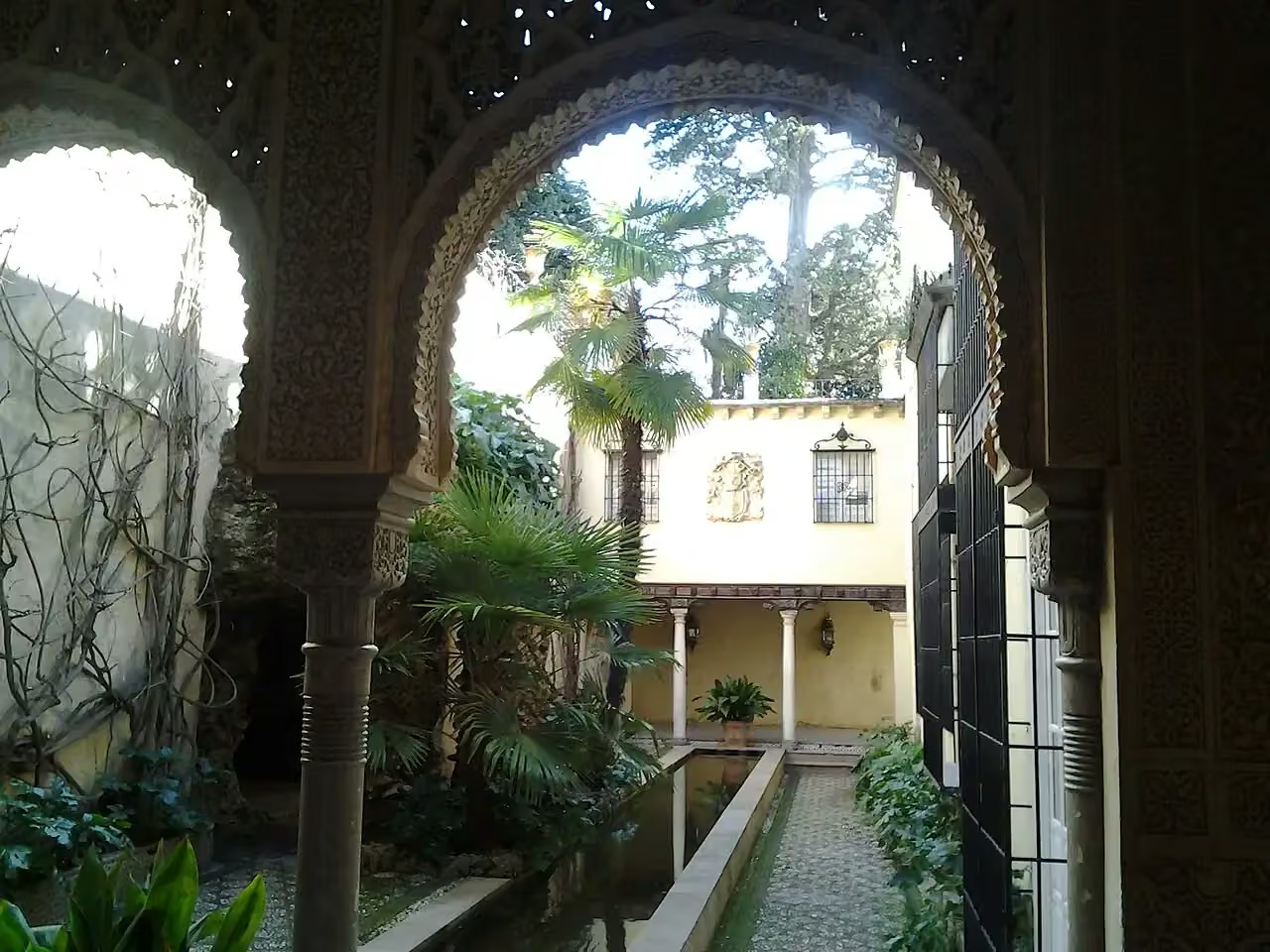
This Nasrid palace was built during Muhammad II’s reign, between 1273 and 1302, above a tower in the city wall. It belonged to the Huerta Grande de la Almanjarra and recalls royal estates within the city. Imagine the relationship between pavilion, garden and urban defences. It offers another scale of palace architecture, different from the Alhambra’s great monumental enclosure.